October 14, 2026
Adaptive Yoga
Listening to Your Body, and Rebuilding Trust with Abigail Atkinson
After a motor vehicle incident or other traumatic experience, reconnecting with your body can be complicated. Your body may feel different. Your energy may be unpredictable. Movement that once felt automatic can suddenly require planning, effort, or assistance. Sometimes, learning to listen to your body becomes just as important as learning how to move it again.
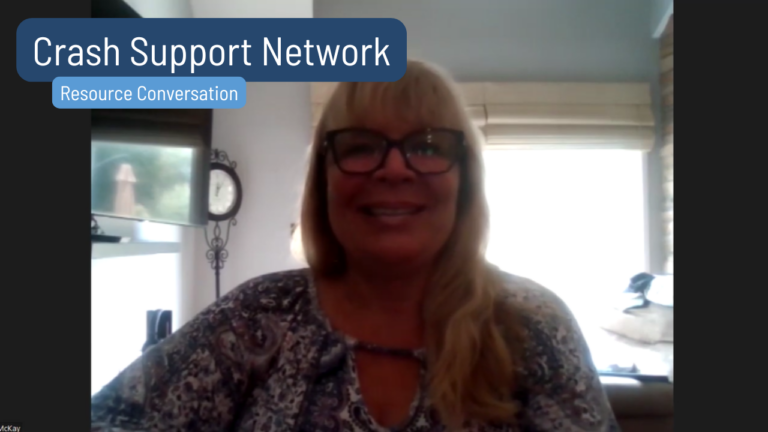
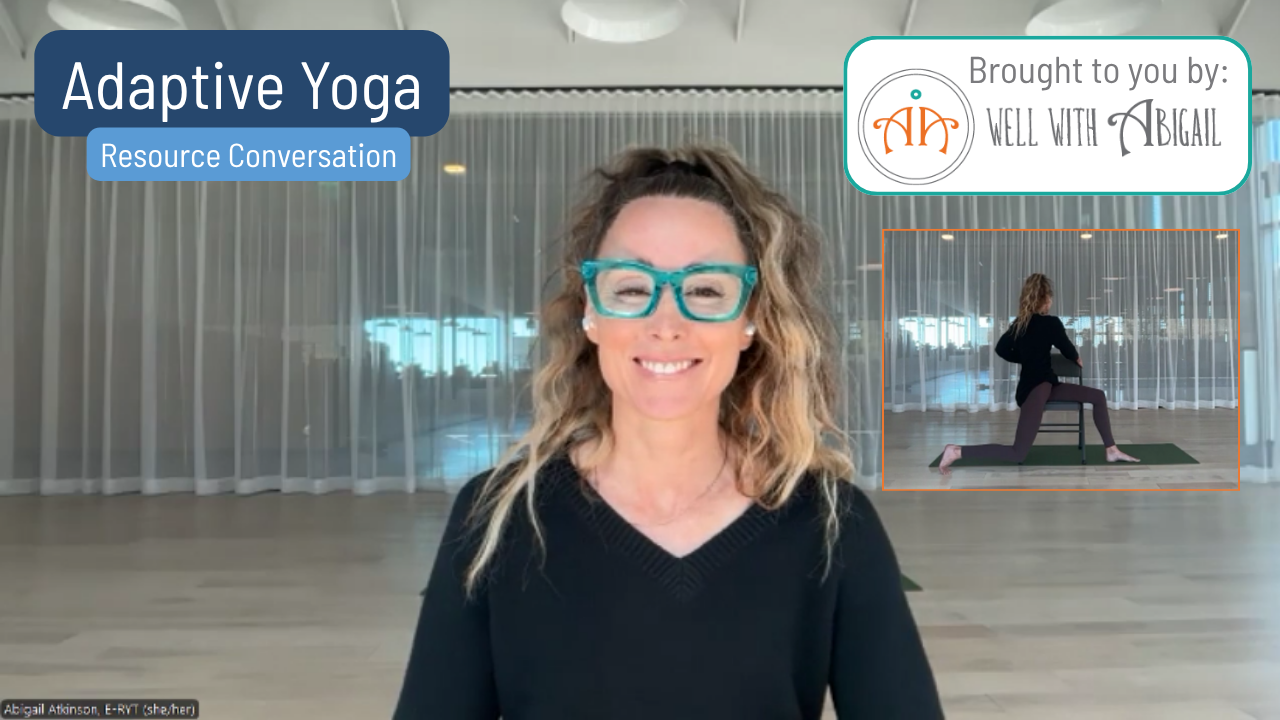
In this Resource Conversation, Sandal Blue Foundation spoke with Abigail Atkinson of Well With Abigail about adaptive yoga, rebuilding trust in your body, and finding ways to move forward at your own pace.
Abigail’s Story
Abigail has been teaching yoga full time for 14 years, but her relationship with yoga changed dramatically in 2012 when she experienced a massive stroke.
At the time, she had just started teaching yoga while also working a corporate job. She was actually leading a yoga session for her coworkers during her lunch break when she had the stroke.
Afterward, Abigail was highly motivated to return to her yoga practice. She worked hard through physical and occupational therapy and spent a year on disability. But something else had changed. Her perspective on life had completely shifted, and she no longer wanted to return to her corporate career. Her experience had changed what she considered important, and yoga became part of the path forward.
Today, Abigail specializes in adaptive yoga for people living with a wide range of abilities and conditions, including people who use wheelchairs, walkers, or canes, as well as people recovering from injuries, traumatic brain injuries, strokes, Parkinson’s disease, and other neurological conditions.
Adaptive yoga isn’t about forcing your body to do something it can’t do. It’s about discovering what your body can do and creating a relationship with it from there.
Cognitive Fatigue Is More Than Being Tired
One of the important topics Abigail discussed was cognitive fatigue. Cognitive fatigue isn’t simply feeling tired after a busy day. It can affect many areas of daily life, and because you can’t necessarily see it from the outside, it can be difficult for other people to understand.
For someone recovering from trauma or a neurological injury, an activity that looks simple to someone else may require significant energy. Learning to recognize and respect that reality can be an important part of recovery.
“Microdose” Your Discomfort
One of Abigail’s most practical ideas was microdosing activity and discomfort.
During her own recovery, Abigail needed an assistive walking device for a long time. Rather than pushing herself until she was completely depleted, she began experimenting with smaller amounts of activity followed by rest.
She described it as microeffort, rest, repeat.
Instead of doing everything at once and then being unable to do anything else until the next day, she began taking small “doses” of activity throughout the day. She might do a little movement, rest, and then come back to it.
She found that when she got the “dosage” right, she was able to repeat the activity more frequently, and her recovery began to progress. Within about three weeks, she no longer needed the walker.
Abigail encourages people to think about this concept beyond exercise. You can have a yoga snack, a physical therapy snack, or a movement snack. A few minutes of activity followed by enough rest to allow your body and brain to recover can sometimes be more sustainable than pushing until you’re completely depleted.
The goal isn’t to prove how much you can push through. It’s to find the amount your body can tolerate and repeat.

You Don’t Have to Do It Alone
Abigail also talked openly about one of the harder parts of recovery: accepting that she needed help.
“I had to accept the reality that I was going to need help and I wasn’t going to be able to do it on my own.”
That required humility and vulnerability. Recovery can be uncomfortable no matter what, and learning to accept support doesn’t make that experience easy. But it can help you navigate it with more resources around you.
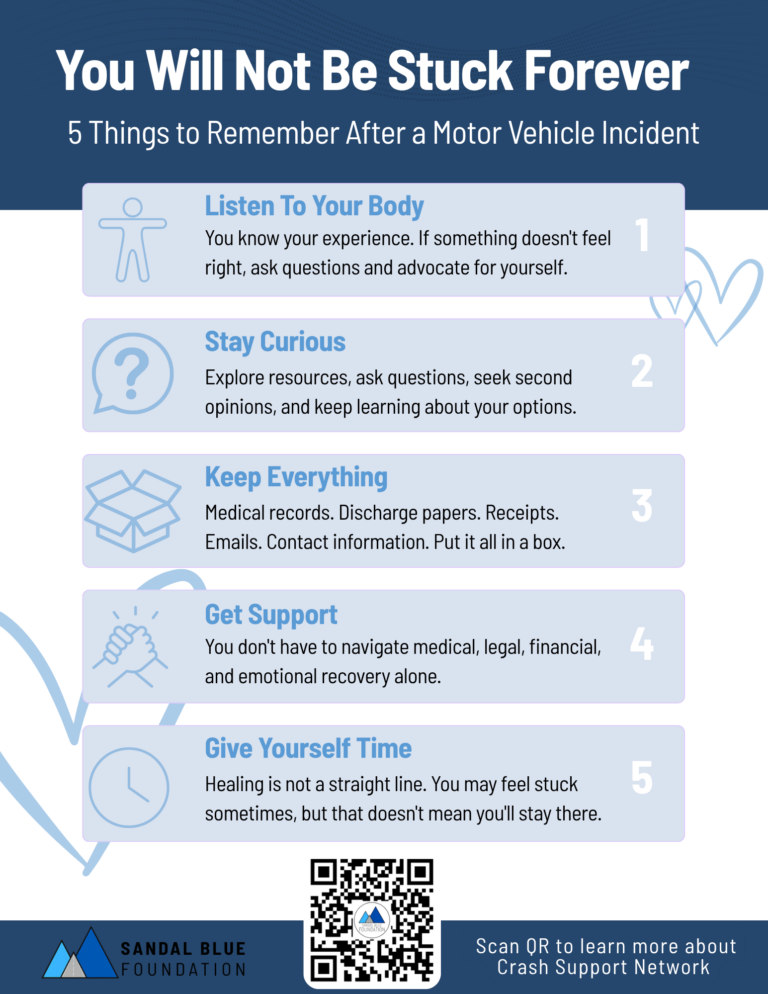
Sometimes, listening to your body also means being willing to speak up, even when someone else believes you should do something differently.
Abigail shared an experience with an EMT that challenged her to trust what she was experiencing in her own body. One statement stayed with her: “I’m willing to be wrong for you, Abigail.”
That experience reinforced something important for her: medical professionals bring valuable knowledge and expertise, but you also have valuable information about your own body. Learning to listen to both can be part of rebuilding self-trust.
It’s Okay to Try Something New
Eight years after her stroke, Abigail participated in a six-month neuro vision therapy program. It was difficult, but she was willing to try something new because she thought it might help. That experience gave her another significant boost in her recovery.
Her message is simple: you don’t have to do everything at once. You can take baby steps. You can try something and reassess. You can listen to your body’s response. You can change the dosage. You can rest.
Little by little, those experiences can help you rebuild trust in yourself and your body.
Your Brain Is Trying to Protect You
Abigail explained that the brain’s primary job is to keep you safe. When you try something new, your brain may respond with signals such as weakness, pain, dizziness, or fatigue as it tries to protect you.
That doesn’t mean those sensations should simply be ignored or pushed through. Instead, Abigail encourages people to pay attention, take a break, go at their own pace, and try a smaller amount when they’re ready.
Over time, you can learn what your body is telling you and begin to feel less afraid of those messages. You get to determine the dosage.
Try Microdosing Your Movement
If your body and brain are sending you signals that something feels like too much, you don’t necessarily have to stop completely or push through. Instead, consider microdosing your movement: try a small amount of an activity, take a break, and then return to it when you’re ready.
A few minutes of movement, followed by rest, may allow you to repeat the activity more often throughout the day rather than doing too much at once and needing an entire day to recover. As Abigail described it, microeffort, rest, repeat.
The goal is to find your body’s “dosage” and gradually build from there. Recovery doesn’t have to happen in big leaps. Sometimes, small and consistent efforts are what help you build confidence, capacity, and trust in your body.
A Simple Seated Yoga Practice
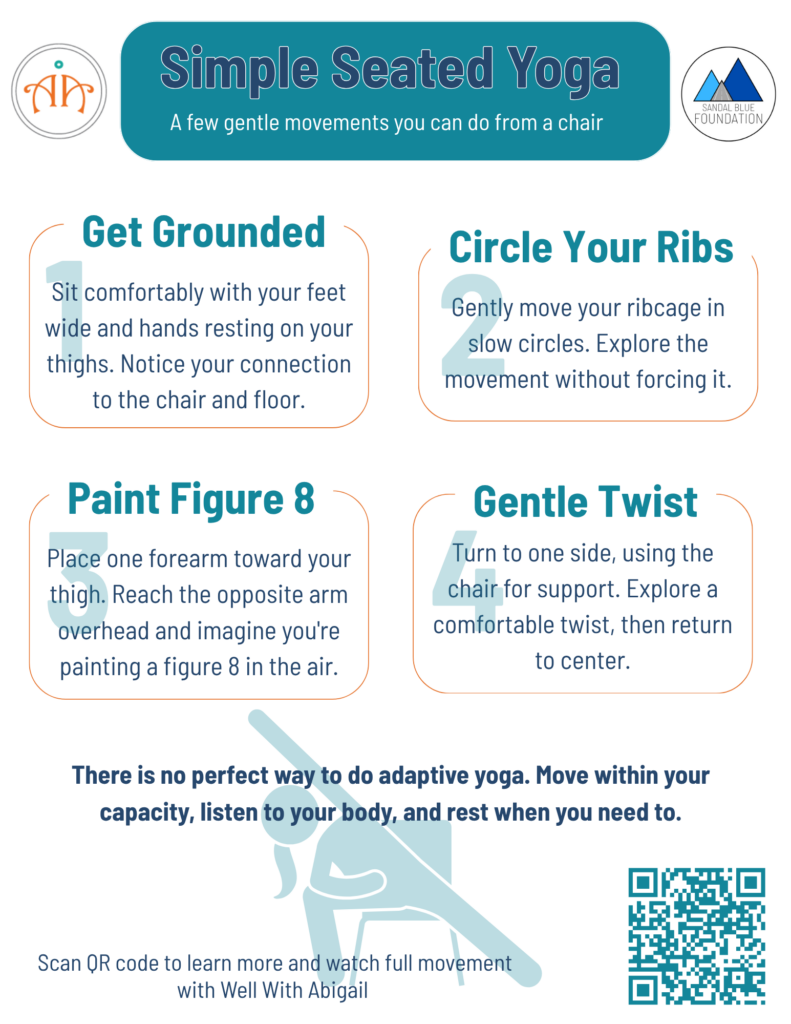
During our conversation, Abigail demonstrated several movements that can be adapted for a seated practice. One option begins by pressing your body gently into the chair and placing your feet wide, with your hands resting on your thighs. Notice the feeling of being grounded and supported.
From there, you can explore gentle movements such as drawing circles with your ribs, bringing your right forearm toward your right thigh while reaching your left arm up and overhead, and imagining you’re holding a paintbrush and “painting” a figure eight in the air.
You can also turn to the side with one leg supported on the chair and the other on the ground, holding the chair like a steering wheel as you gently twist toward it. Then repeat the movements on the opposite side.
These movements aren’t about getting the “perfect” yoga pose. They’re an opportunity to notice your body, move within your own range, and practice listening. If you’re trying new movement after an injury or medical condition, work within the guidance of your healthcare and rehabilitation team and adapt movements to your individual needs.
Start Where You Are