
Understanding EMDR: Helping Your Brain Heal After Trauma
After a traumatic experience, many survivors tell us the same thing:
“I know I’m safe… so why does my body still react like I’m not?”
Maybe your heart races when you hear sirens. Maybe being a passenger makes your stomach tighten. Maybe driving past the intersection where everything changed feels impossible. You may understand logically that the danger has passed, but your nervous system hasn’t fully caught up.
In this Resource Conversation, we sat down with Shelley Freeman, a certified EMDR therapist, to talk about one of the most researched trauma therapies available: EMDR (Eye Movement Desensitization and Reprocessing).
Whether you’re a motor vehicle incident survivor, a caregiver, or someone supporting a loved one through recovery, this conversation offers insight into how trauma affects the brain—and how healing is possible.
What is EMDR?
EMDR stands for Eye Movement Desensitization and Reprocessing.
Rather than simply talking about what happened, EMDR helps your brain process experiences that became “stuck” because they overwhelmed your ability to cope at the time.
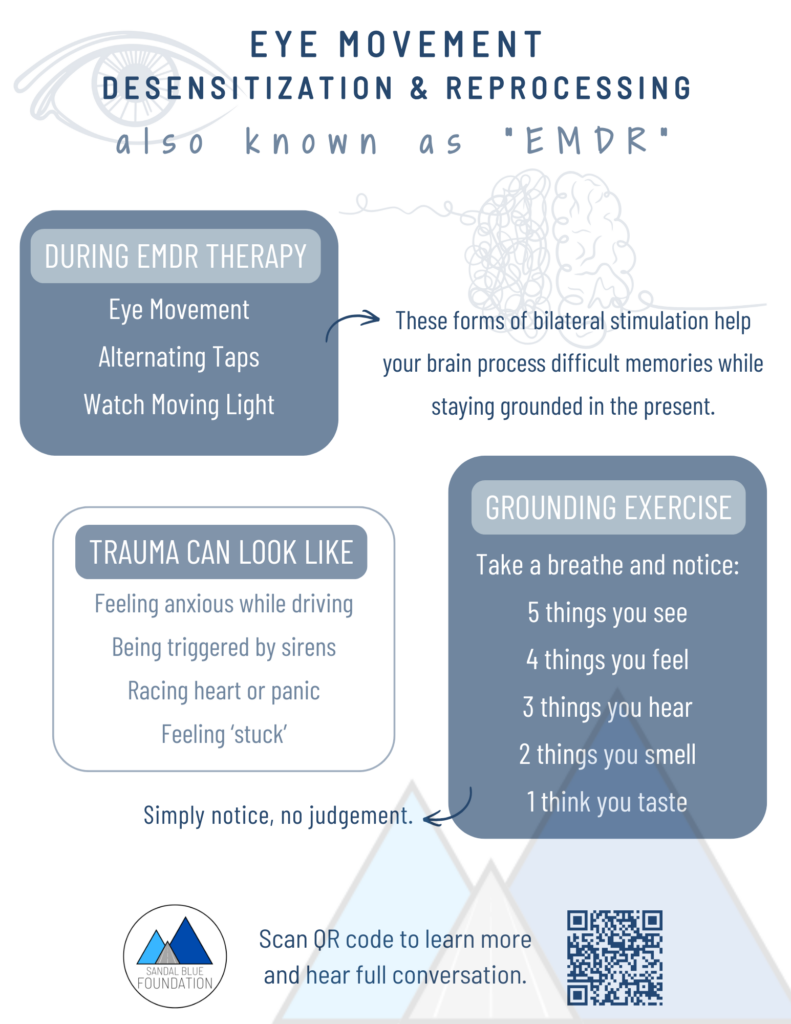
During EMDR, a therapist uses bilateral stimulation—such as eye movements, alternating taps, or alternating sounds—to engage both sides of the brain while you gently notice thoughts, emotions, body sensations, and memories connected to the traumatic experience.
Shelley explains it as having “one foot in the present and one foot in the memory.”
You’re not being pulled back into the trauma. Instead, you’re staying grounded in the safety of today while allowing your brain to process what happened then.
Trauma Isn’t Just What Happened
One of the most helpful parts of our conversation was Shelley’s reminder that trauma isn’t defined only by the event itself.
Trauma happens when something overwhelms our ability to cope in that moment.
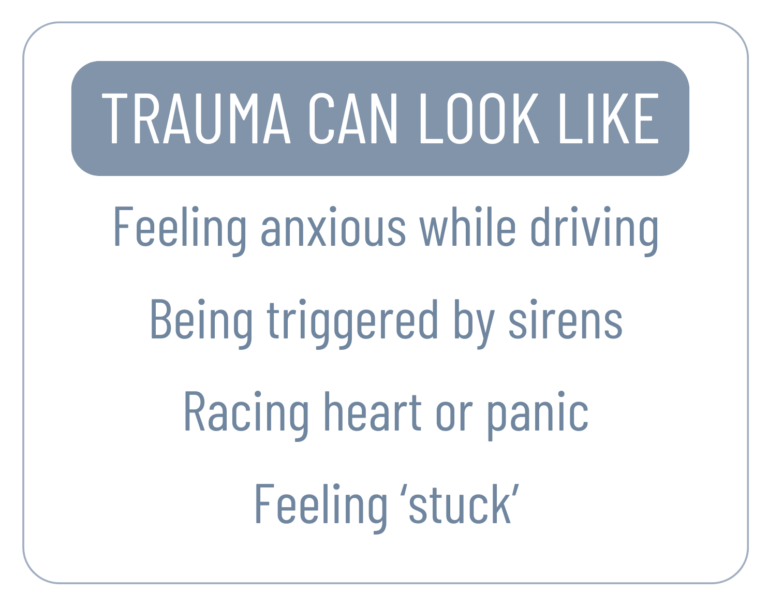
For many motor vehicle incident survivors, that might look like:
- Feeling anxious before driving.
- Becoming startled by sirens or screeching brakes.
- Experiencing panic as a passenger.
- Feeling tension in your stomach or chest without knowing why.
- Avoiding certain roads or intersections.
- Feeling disconnected or “checked out.”
These reactions aren’t signs that you’re weak.
They’re signs that your brain is still trying to protect you.
How is EMDR Different From Traditional Talk Therapy?
Traditional talk therapy often focuses on understanding your thoughts and experiences through conversation.
EMDR includes talking, but it also pays close attention to what your body is experiencing.
Shelley explained that trauma affects multiple parts of the brain:
- The prefrontal cortex, responsible for reasoning and logical thinking.
- The limbic system, where emotions are processed.
- The brainstem, which controls many automatic survival responses.
During a traumatic event, the brain’s logical center often becomes less active while the survival systems take over.
Through bilateral stimulation, EMDR helps these systems begin communicating again so the brain can finally process—or “digest”—what happened instead of remaining stuck in survival mode.
Do You Have to Relive the Trauma?
This is one of the biggest misconceptions about EMDR.
The answer is no.
Shelley emphasized that EMDR is intended to be a gentle process.
Clients remain connected to the present while noticing memories, thoughts, emotions, or body sensations that arise. The therapist helps maintain that sense of safety throughout the session.
The goal isn’t to force yourself to relive the worst moment.
The goal is to help your brain process it so it no longer carries the same emotional charge.
It’s Normal to Feel “Stuck”
Many trauma survivors wonder if they’re doing something wrong because they can’t seem to move forward.
Shelley offered an encouraging reminder:
Our brains naturally move toward healing.
During EMDR, therapists don’t force the process. Instead, they help clients notice whatever comes up without judgment.
Sometimes memories unfold gradually—like gently unraveling a ball of yarn. As the brain processes the experience, new insights, emotions, or healthier beliefs often begin to emerge naturally.
When someone reaches a place where processing feels stuck, therapists have additional techniques—called interweaves—to help the brain continue moving forward in a safe, manageable way.
Healing Isn’t Just for Survivors
One message we especially appreciated was that caregivers need support too.
Watching someone you love experience trauma can be traumatic in itself.
Parents, spouses, family members, and close friends may develop their own fears, anxiety, or overwhelming emotions after witnessing or living through someone else’s medical crisis.
Your experience matters.
Taking care of your own mental health isn’t selfish—it’s an important part of healing for everyone involved.
A Grounding Exercise You Can Practice Today
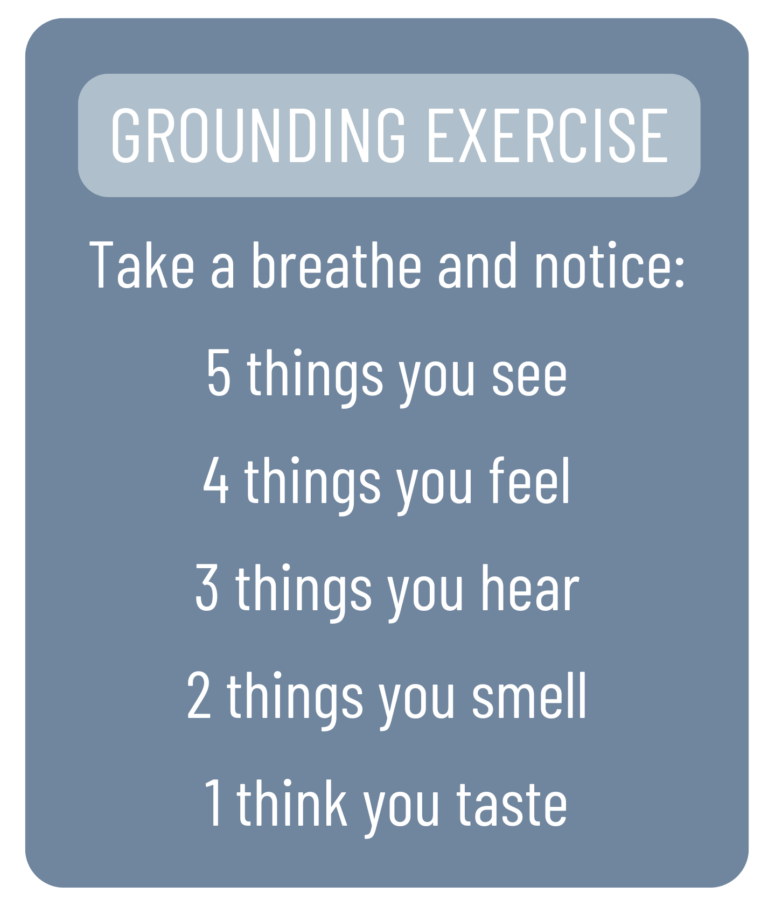
While EMDR should be done with a trained therapist, Shelley shared a simple mindfulness exercise that anyone can practice.
Start by taking a slow breath in.
Then let your exhale be just a little longer than your inhale.
Return to a comfortable breathing rhythm.
Next, gently notice your five senses:
- What can you see?
- What can you hear?
- What can you feel?
- What can you smell?
- What can you taste?
There’s nothing to fix.
Nothing to judge.
Simply notice what is true at this moment.
Grounding exercises like this help remind your nervous system that you are here, now, and safe.
Helping Your Brain Notice the Good
Our brains naturally pay attention to danger—that’s how we’re wired for survival.
Shelley encourages intentionally helping your brain notice moments of safety and joy, too.
One simple practice involves slow butterfly taps (alternating taps across each side of your body) while thinking about something that brings you comfort or happiness—a favorite place, someone you love, a meaningful memory, or even something as simple as your favorite dessert.
As you tap slowly, notice what happens in your body.
Do your shoulders soften?
Does your breathing change?
Does your stomach relax?
You can also practice this during everyday moments.
Someone lets you merge in traffic.
You make it through a drive that once felt impossible.
You hear laughter.
You feel the sun on your face.
Pause.
Notice it.
Let your brain experience that moment of safety.
The more we practice recognizing these moments, the more our nervous systems learn that they exist.
Healing Starts with the Basics
Before we ended our conversation, Shelley offered a simple reminder that many of us need to hear.
Healing doesn’t always begin with something complicated.
Sometimes it begins by asking ourselves:
- Am I getting enough rest?
- Am I drinking enough water?
- Am I nourishing my body?
- Am I allowing myself moments of joy?
- Am I making space for play, connection, or movement?
These foundational habits won’t erase trauma, but they create a stronger foundation for healing.
Final Thoughts
Healing after trauma isn’t about pretending the hard things didn’t happen.
It’s about helping your brain and body recognize that while the experience was real, it doesn’t have to define every moment that follows.
If you’ve been feeling stuck after a motor vehicle incident—or if you’re supporting someone who is—know that there are effective, evidence-based therapies available.
You don’t have to navigate healing alone.
At Sandal Blue Foundation, we’re committed to connecting survivors and caregivers with trusted professionals, practical tools, and hope for the road ahead. We hope this conversation is one more resource that helps you move forward—one step at a time.