How Talk Therapy Can Support Healing After a Motor Vehicle Incident
After a motor vehicle incident, it’s common to feel like your mind and emotions are working against you. You may replay the crash over and over, feel disconnected from yourself, or wonder if what you’re experiencing is “normal.”
For this Resource Conversation, we sat down with Ben Rhinesmith, a licensed Marriage and Family Therapist from Desert Oasis Therapy, to talk about what therapy actually looks like, why it can be so helpful after trauma, and some practical ways to navigate the healing process.
Here are some of the biggest takeaways from our conversation.
Talk therapy is much more than talking to a friend
Many people hesitate to try therapy because they think it’s simply sitting in a room and talking about their problems. While conversation is certainly part of it, therapy is much more intentional.
Therapists use evidence-based approaches to help people understand their experiences, develop healthier emotional and relational habits, and make meaningful changes in their lives.
Ben explained that he often looks at people through several different therapeutic lenses, including:
- Systems theory, which explores how the relationships and environments around us influence healing.
- Narrative therapy, which helps people examine the stories they’ve developed about themselves and discover ways to rewrite those stories.
- Solution-focused therapy, which builds on a person’s existing strengths instead of only focusing on what’s wrong.
The goal isn’t simply to talk about what happened – it’s to help you move toward the life you want.
Therapy doesn’t have to feel heavy all the time
Many people assume therapy is emotionally exhausting every single session.
Ben challenged that idea.
While difficult conversations certainly happen, therapy can also be empowering, encouraging, and even enjoyable. Celebrating progress, recognizing strengths, and finding hope are just as important as processing pain.
Healing isn’t only about surviving difficult moments—it’s also about learning how to experience joy again.
“Is what I’m feeling normal?”
One of the most common questions survivors ask is whether their reactions after a traumatic event are normal.
Ben introduced the idea of common humanity – the understanding that many of the emotional responses following trauma are shared experiences.
After a motor vehicle incident, your entire perception of the world may change. Things that once felt safe may suddenly feel threatening.
Rather than expecting yourself to immediately “get over it,” Ben encourages people to remember that healing comes in waves.
There will be good days. There will be hard days.
The overall direction can still be forward.
Be patient with yourself. Be compassionate with yourself. Healing is rarely a straight line.
Your thoughts are not always the truth
Trauma often brings an overwhelming number of thoughts.
Some are helpful. Some are frightening. Some simply aren’t true.
Ben encourages people not to label thoughts as “good” or “bad.” Having a thought doesn’t mean it’s a fact. If you misspeak, it doesn’t mean you’re unintelligent. If you feel afraid, it doesn’t mean you’re unsafe. Sometimes it simply means your brain is processing something incredibly difficult.
He shared a helpful way to think about it.
Our brains have a fast pathway designed for survival. Imagine seeing a tiger at a watering hole. Your brain immediately says, “Run!” But then a slower pathway kicks in. You realize you’re actually watching the tiger from inside a jeep. The danger wasn’t what it first appeared to be.
After trauma, our first thoughts are often protective – not necessarily accurate.
Sometimes we need to wait for the second, third, or fourth thought before we arrive at the one that truly reflects reality.
When grief feels like it takes over everything
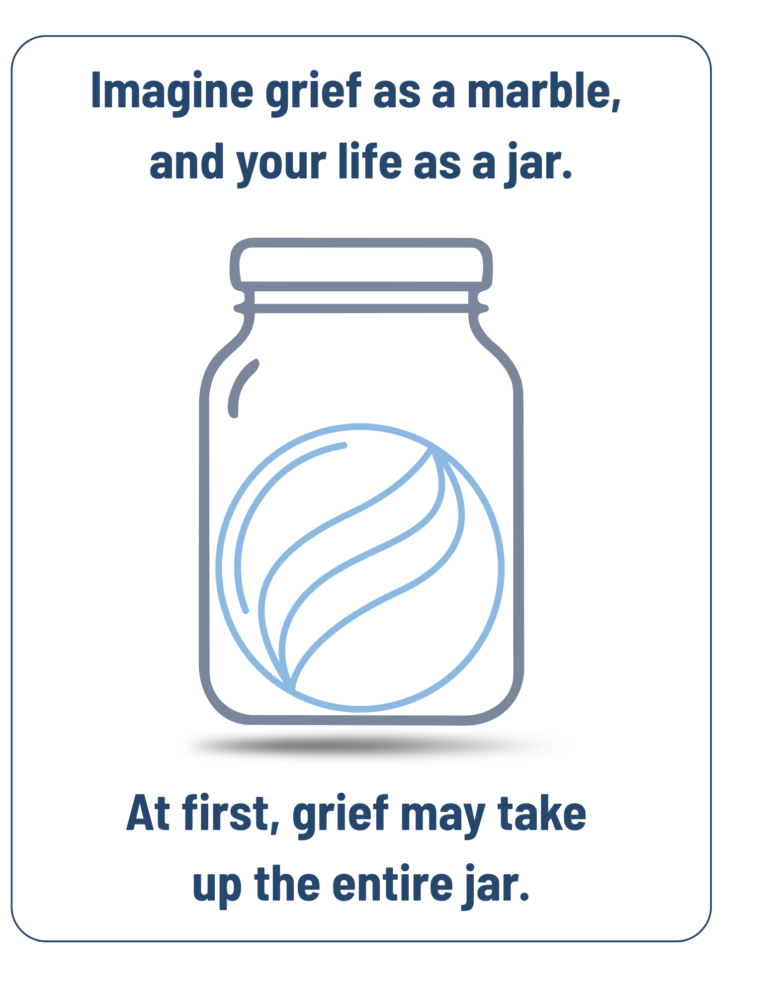
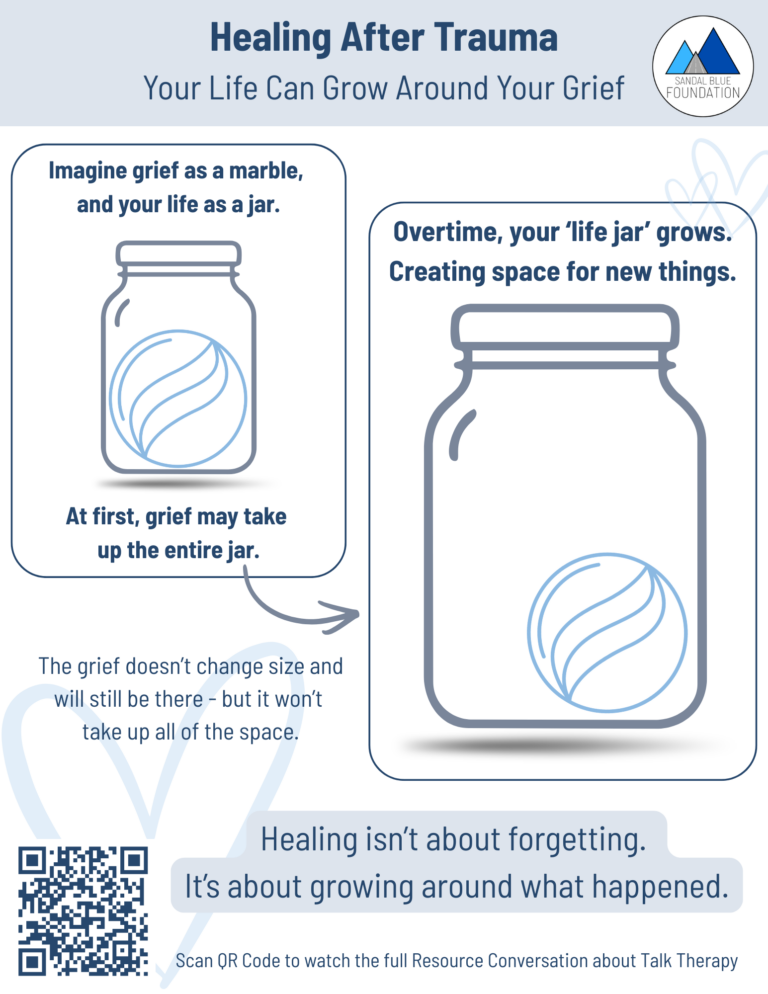
One of Ben’s favorite ways to explain grief is through the image of a jar.
At first, grief feels like it fills your entire life.
Every thought. Every conversation. Every moment.
Over time, something beautiful happens.
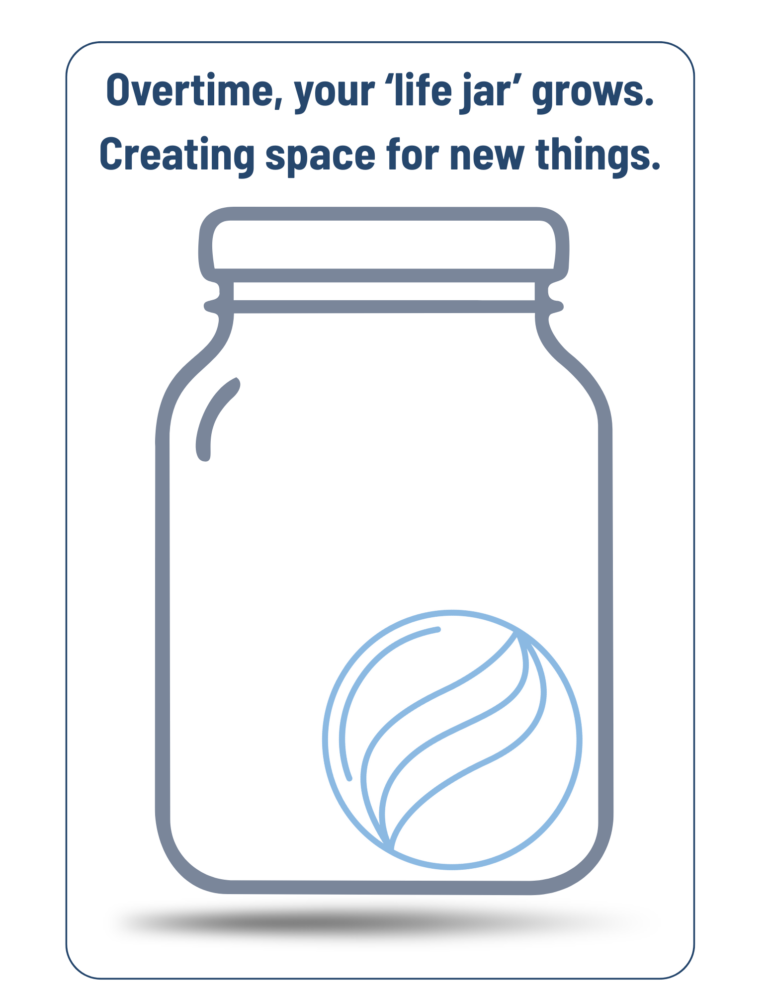
The grief doesn’t necessarily get smaller—but your life gets bigger.
Imagine your grief as a marble inside a jar. The marble stays the same size. But the jar continues to grow. As your life expands, there becomes room for friendships, laughter, purpose, hobbies, hope, and new experiences alongside the grief.
The grief is still there. And you are still growing.
Both can exist together.
Look for glimmers, not just triggers
Many survivors become familiar with the idea of triggers – places, sounds, or situations that bring difficult emotions back to the surface.
Ben encourages people to also begin looking for glimmers.
Glimmers are small moments that remind your nervous system that life can still contain goodness.
Watching a sunset. Playing a board game. Going to a movie. Laughing with someone you love. Enjoying a favorite meal. These moments don’t erase the pain. They don’t disrespect what happened.
Instead, they remind us that hope still exists.
Healing isn’t choosing between hard moments and beautiful moments. It’s learning to hold space for both.
Every family member heals differently
When an entire family experiences a traumatic event, everyone creates their own story about what happened.
Each person processes grief differently.
Each person moves through emotions differently.
Each person heals on their own timeline.
No stage is better than another.
No timeline is “correct.”
Giving yourself – and your loved ones – the freedom to heal differently can reduce frustration and increase compassion within the family.
Grief is more than the loss of life
We often associate grief with death, but grief is the loss of anything meaningful.
After a motor vehicle incident, people may grieve:
- Their health
- Their independence
- Their sense of safety
- Their identity
- Their routines
- Their future plans
Recognizing these losses helps us understand why healing takes time.
Keep looking until you find the right support
Ben ended our conversation with an encouraging reminder.
You were never meant to go through trauma alone.
Finding the right therapist – or even the right type of therapy – sometimes takes time.
If one therapist isn’t the right fit, don’t give up. If one approach doesn’t connect with you, keep looking. There are people who want to help. There are therapists who care deeply about your healing.
Keep reaching out until you find the support that feels right for you.
Watch the full conversation
Remember: healing isn’t about leaving your trauma behind. It’s about growing a life that’s big enough to hold both the hard and the beautiful.