October 6, 2026
Finding Support and Community After a Motor Vehicle Incident
A Conversation with Families for Safe Streets
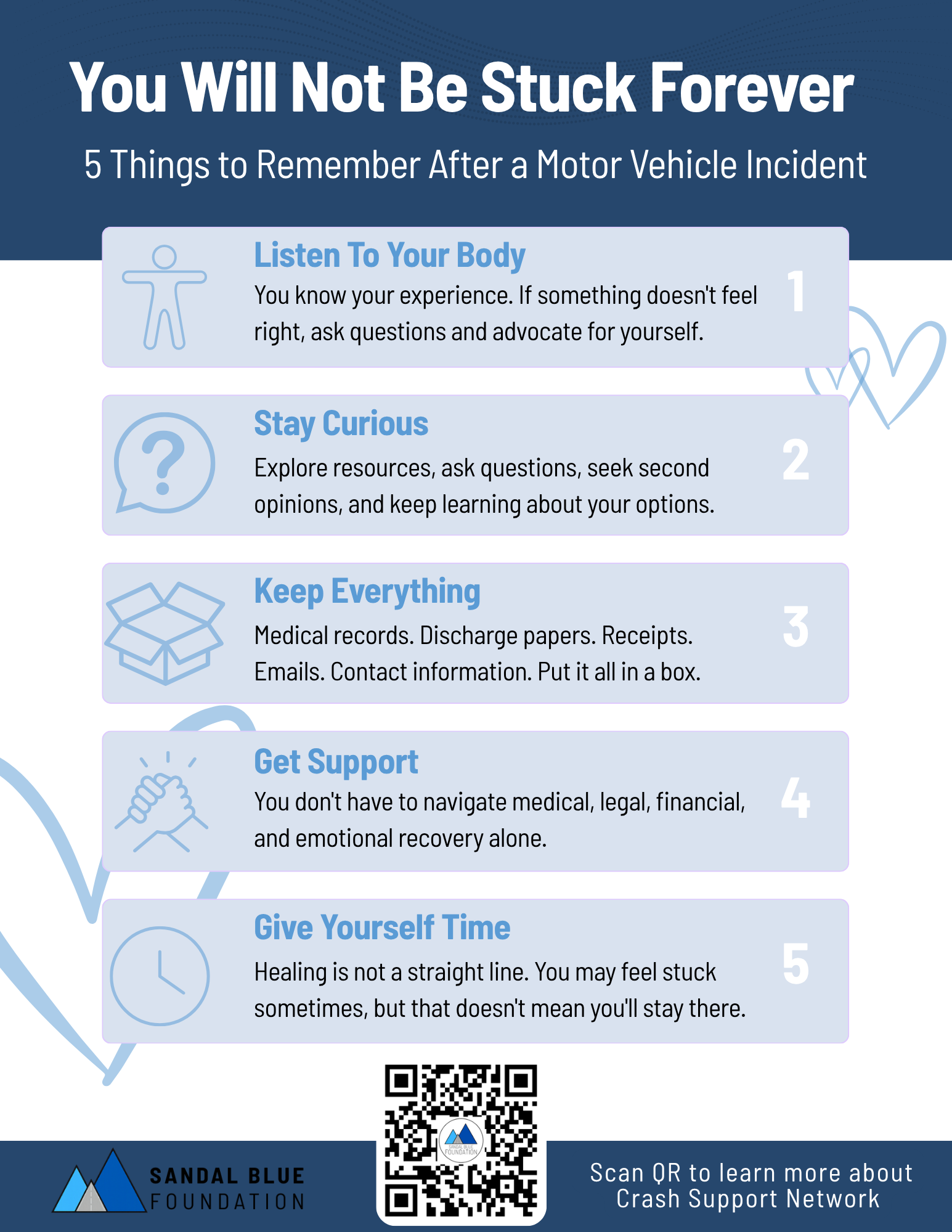
After a motor vehicle incident, it can be difficult to know where to turn.
You may be dealing with physical injuries, grief, trauma, changes to your everyday life, complicated systems, or simply the feeling that no one around you really understands what you have been through.
And sometimes, you are not just trying to recover. You also want to make sure what happened to you does not happen to someone else.
That is where community can make an enormous difference.
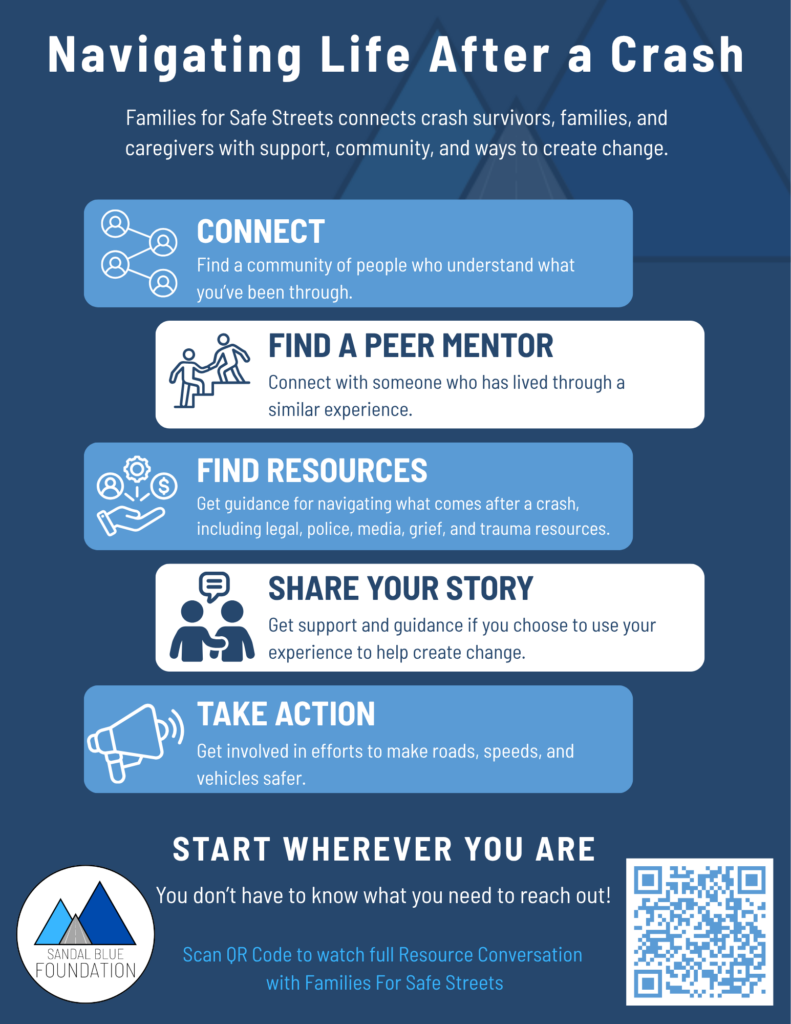
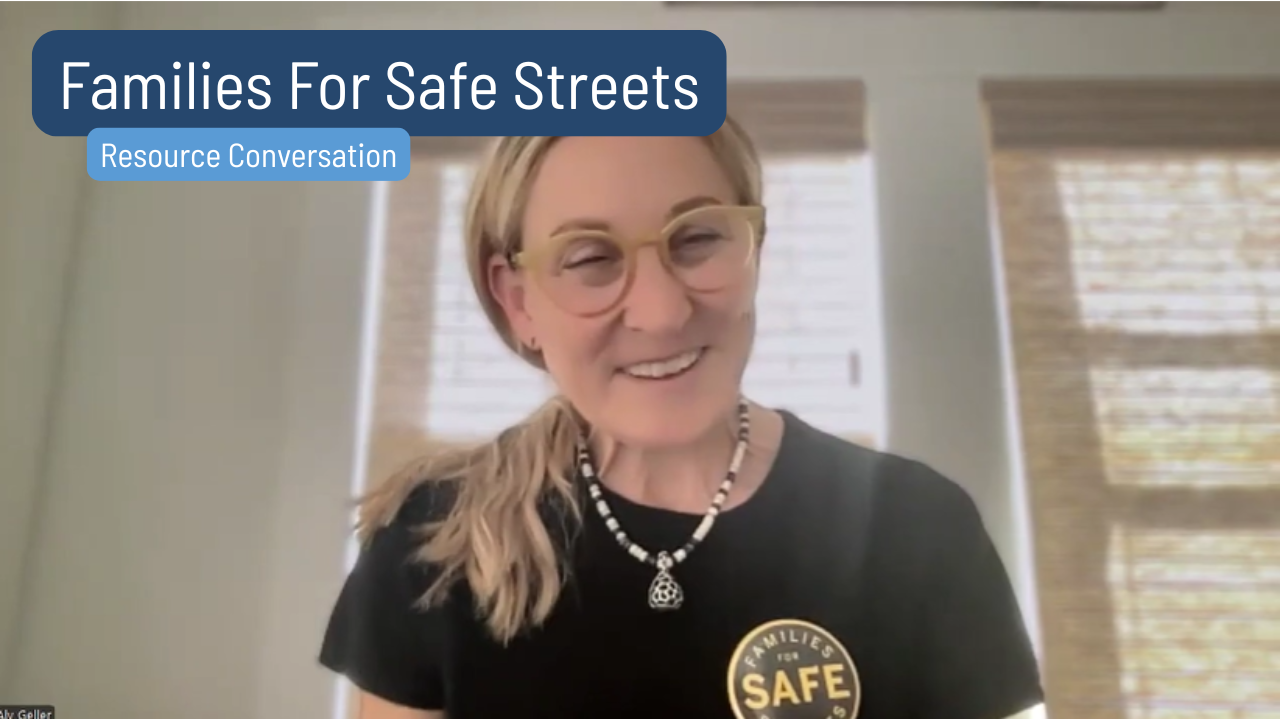
In this Resource Conversation, Sandal Blue Foundation spoke with Aly Geller from Families for Safe Streets about the support available to people who have survived a crash, lost a loved one, or are caring for someone affected by a crash.
You Are Not Alone
Families for Safe Streets is a growing national organization with approximately 2,000 members and chapters across the country. The organization supports people whose lives have been affected by motor vehicle incidents while also working toward preventing future deaths and injuries.
Aly coordinates support services for the national organization. Her role includes helping new community members find the support, resources, and opportunities that fit where they are right now.
That last part is important.
There is no single “right” place to be after a traumatic event.
Maybe you are ready to connect with someone who understands. Maybe you need practical information about navigating what comes next. Maybe you want to talk with other survivors or people who have experienced a loss. Or maybe you are ready to use your experience to advocate for safer roads.
Families for Safe Streets has resources for all of those places.
As Aly shared, their team is ready to ask, “Where are you today?” and then help you find what you need right now.
The Power of Being Seen and Heard
One of the most meaningful parts of support after a motor vehicle incident can be talking with someone who truly understands.
There is something powerful about having a witness to your grief, physical pain, fear, frustration, or changing identity.
It can sound deceptively simple: being seen and heard.
But connecting with someone who has been through something similar can help reduce the isolation that often follows a traumatic experience.
Families for Safe Streets offers a peer mentor program that connects community members with trained mentors who have their own experience with crash loss or injury. Mentors receive training in how to have supportive conversations, and whenever possible, people can be connected with someone whose experience is similar to their own.
Sometimes it also helps to meet someone who is a little farther down the road.
When you are in the middle of something incredibly difficult, seeing someone who has found a way forward can offer something important: a glimpse of possibility.
There can be a light at the end of the tunnel.
Support Does Not Have to Be One-on-One
Not everyone wants individual support, and sometimes it helps to be part of a larger community.
Families for Safe Streets offers virtual support gatherings where people affected by crashes can come together, connect, and participate in facilitated conversations.
The organization also hosts special events, including book clubs and guest speakers, giving members opportunities to learn, connect, and build relationships with others who understand.
There is also a National Story Map, an online space created to honor and memorialize people who have been killed in crashes.
The Story Map gives families and survivors a place to be seen and heard. It also allows decision-makers and the broader community to see the human beings behind crash statistics.
Because these are not just numbers.
They are people.
They are parents, children, spouses, siblings, friends, coworkers, and neighbors whose lives have been changed.
Practical Resources for the Road Ahead
Support after a motor vehicle incident is not only emotional.
Sometimes you need to know what to do next.
Families for Safe Streets has a Post-Crash Resource Guide designed to help people navigate some of the systems and situations that can come after a crash, including interacting with law enforcement, navigating the legal system, and responding if the media reaches out.
They also have a member-generated Resource Guide with resources related to grief, trauma, and other needs that can arise after a crash.
These resources are designed to be something you can return to when you are ready.
You do not have to figure everything out at once.
Turning Experience Into Change
For many people affected by crashes, there eventually comes a point when they want to do something to prevent others from experiencing what they have experienced.
Families for Safe Streets creates opportunities for people to do exactly that.
The organization focuses on upstream solutions: evidence-based approaches that address the conditions that contribute to crashes before someone is injured or killed.
Their advocacy work includes safer roads, safer speeds, and safer vehicles.
One current campaign is Stop Super Speeders, which advocates for legislation requiring intelligent speed assistance devices for repeat speeding offenders. The campaign has passed in nine states or jurisdictions and continues to grow.
Families for Safe Streets also has an Ambassador program that provides training for people who want to become involved in advocacy and learn how to help advance this type of legislation in their own state.
You can explore the Stop Super Speeders campaign, see where legislation has passed or is pending, and learn how to get involved.
Why Stories Matter
Story sharing is at the heart of much of Families for Safe Streets’ advocacy work.
Research shows that stories can make information more memorable and can influence decision-makers. But Aly also recognizes something equally important:
Sharing your story can be empowering, and it can also be incredibly difficult.
That is why Families for Safe Streets does not simply ask people to tell their stories and send them on their way.
They work to create a foundation of support around the process.
Aly provides one-on-one guidance from the time someone joins the organization and throughout their involvement. The organization also provides training and support to help people understand how to share their experiences in ways that feel appropriate for them.
You get to decide what you share, when you share it, and how you participate.
You Can Start Wherever You Are
If you are interested in connecting with Families for Safe Streets, you do not have to know exactly what you need before you reach out.
One of the easiest places to start is by becoming a member.
Once you join, you can be connected with a local chapter when one is available in your area. Chapters are supported by sponsor organizations and provide opportunities for community gatherings, programs, advocacy, and connection.
You can also:
Connect with a trained Peer Mentor
Attend virtual support gatherings
Take the Ambassador training
Get involved with the Stop Super Speeders Campaign
Explore the Post-Crash Resource Guide
Find grief and trauma resources through the Member-Generated Resource Guide
Explore the National Story Map
Find a Families for Safe Streets chapter near you
Reach out for a one-on-one conversation about where to start by emailing info@familiesforsafestreets.org
And if you do not see exactly what you need, you can reach out directly. Their team can help you figure out what might be a good next step.