
Patient Advocacy 2
You Are Not Alone

Patient Advocacy in Action

Partnering to Strengthen Voices in Research and Care

Patient advocacy is not a concept—it is a lived necessity.

It is what happens when someone in the middle of a medical crisis tries to understand complex decisions. It is what happens when families are navigating hospital systems they never expected to enter. And it is what happens when lived experience is finally brought into the spaces where health care decisions are made.

At Sandal Blue Foundation, we believe patient advocacy is strongest when it is shared, structured, and community-driven. That is why our partnership with the University of Maryland School of Pharmacy’s PATIENTS Program has been such an important part of our work.

A Shared Mission: Centering the Patient Voice

The PATIENTS Program is a nationally recognized community-academic partnership that works to ensure patients, caregivers, and communities are not just participants in research—but co-creators of it. Their work focuses on building trust, improving communication, and strengthening the way research reflects real lived experience.

At its core, their mission aligns deeply with ours:

  • People closest to the problem should help shape the solution
  • Lived experience is essential data
  • Trust is built through consistency and collaboration
  • Health equity requires intentional engagement

This is patient advocacy in action—not as a service provided, but as a system built together.

Expanding Impact: PATIENTS Going National

One of the most powerful expansions of this work is the PATIENTS Going National initiative, which extends their community-engaged research model beyond Baltimore to communities across the United States.

This initiative is designed to bring patient and community voices into research at a national scale by partnering with groups connected through shared experiences such as chronic illness, disability, mental health, aging, and more.

Rather than treating communities as passive recipients of research, this model recognizes something critical:

Communities are experts in their own lived experience.

Through PATIENTS Going National, those lived experiences are being actively integrated into how research questions are formed, how studies are designed, and how health solutions are developed.

You can learn more about the initiative here: The PATIENTS Program and their national expansion effort.

Why This Matters for Patient Advocacy

Patient advocacy is often thought of as something that happens at the bedside or in a hospital hallway.

But true advocacy also happens upstream—in research design, policy development, and system planning.

When patients are included early in the process, everything changes:

  • Research becomes more relevant to real-life needs
  • Communication becomes clearer and more respectful
  • Barriers to care are identified sooner
  • Solutions are shaped by lived experience, not assumptions

This shift is what makes partnerships like ours with the PATIENTS Program so meaningful. It moves advocacy from reaction to co-creation.

What We See in Practice

Through this collaboration, we see a consistent truth:

When people are given space to share their lived experience—and when that experience is taken seriously—systems begin to change.

We see:

  • Caregivers who finally feel heard in clinical conversations
  • Survivors whose experiences help shape research priorities
  • Communities contributing insight that improves how care is delivered
  • A growing culture of trust between institutions and the people they serve

This is what it looks like when advocacy is not an afterthought, but a foundation.

Moving Forward: Building a More Inclusive Future in Health Care

Patient advocacy is not static. It grows as systems listen more deeply and include more voices.

The PATIENTS Program’s expansion through PATIENTS Going National represents a shift toward a more inclusive model of research and health care—one where patients are not just subjects of study, but active partners in shaping the future of health.

At Sandal Blue Foundation, we are proud to stand alongside work that reflects this belief:

Health care is strongest when it is built with the people it serves—not just for them.

Closing Thought

Advocacy begins with listening.

But it becomes powerful when listening turns into action—and action turns into shared ownership of change.

This partnership reminds us that when patient voices are centered, health care becomes more human, more accurate, and more just.

And that is the direction we are committed to moving in—together.

Safe Driving Pledge Badge
Emergency and Preparedness

Safe Driving Starts With a Choice

A Pledge to Protect Lives

Every time we get behind the wheel—or ride as a passenger—we’re making decisions that matter. Some of those decisions seem small in the moment: a quick glance at a phone, a few seconds of distraction, a conversation that pulls attention away from the road. But in reality, those small moments can change a life forever.
At Sandal Blue Foundation, we’ve seen firsthand how quickly everything can change because of a motor vehicle accident. That’s why safe driving isn’t just something we talk about—it’s something we actively commit to.
Safe driving is more than awareness. It’s a daily choice, a mindset, and a promise we make to ourselves, our passengers, and everyone sharing the road.

Why a Safe Driving Pledge Matters

A pledge is more than words on a page—it’s a personal commitment to action.

When you make a safe driving pledge, you are choosing to:

  • Stay focused on the road, not distractions
  • Make safety your first priority every time you drive
  • Protect not only yourself, but your passengers and other families on the road
  • Speak up when something doesn’t feel safe

Safe driving is not something that happens automatically. It is a skill built through intention, consistency, and accountability.

And importantly, it’s something that works best when we don’t do it alone.

The Role of Passengers in Safe Driving

Safety doesn’t rest only with the driver.

Passengers play a powerful role in helping prevent distractions and encouraging responsible choices. Sometimes that means turning down a conversation. Sometimes it means speaking up when something feels unsafe. And sometimes it simply means being aware that your presence in the car carries responsibility too.

A culture of safe driving is built together—driver and passenger alike.

What Safe Driving Looks Like in Real Life

Safe driving isn’t complicated, but it does require discipline. It looks like:

  • Choosing to put your phone away before the car moves
  • Wearing your seatbelt every single trip
  • Staying alert and well-rested before driving
  • Following speed limits and road laws, even when no one is watching
  • Avoiding distractions—physical, emotional, and digital
  • Being fully present behind the wheel

These actions may feel simple, but they are powerful. They are the difference between risk and responsibility.

One Decision Can Change Everything

At Sandal Blue Foundation, we exist because we understand what it means when one moment on the road changes everything.

That’s why safe driving isn’t just prevention—it’s protection. It’s care for your future self, your family, and every person you may never meet but share the road with.

Every time you choose safety, you are helping reduce the ripple effect of trauma that too many families experience after crashes.

Take the Safe Driving Pledge

We invite you to make a personal commitment today:

A commitment to stay focused.
A commitment to stay responsible.
A commitment to speak up.
A commitment to protect life—starting with your own choices behind the wheel.

Because safe driving isn’t just about avoiding accidents.

It’s about deciding that every life on the road matters—including yours.

First Responders
Media and Features

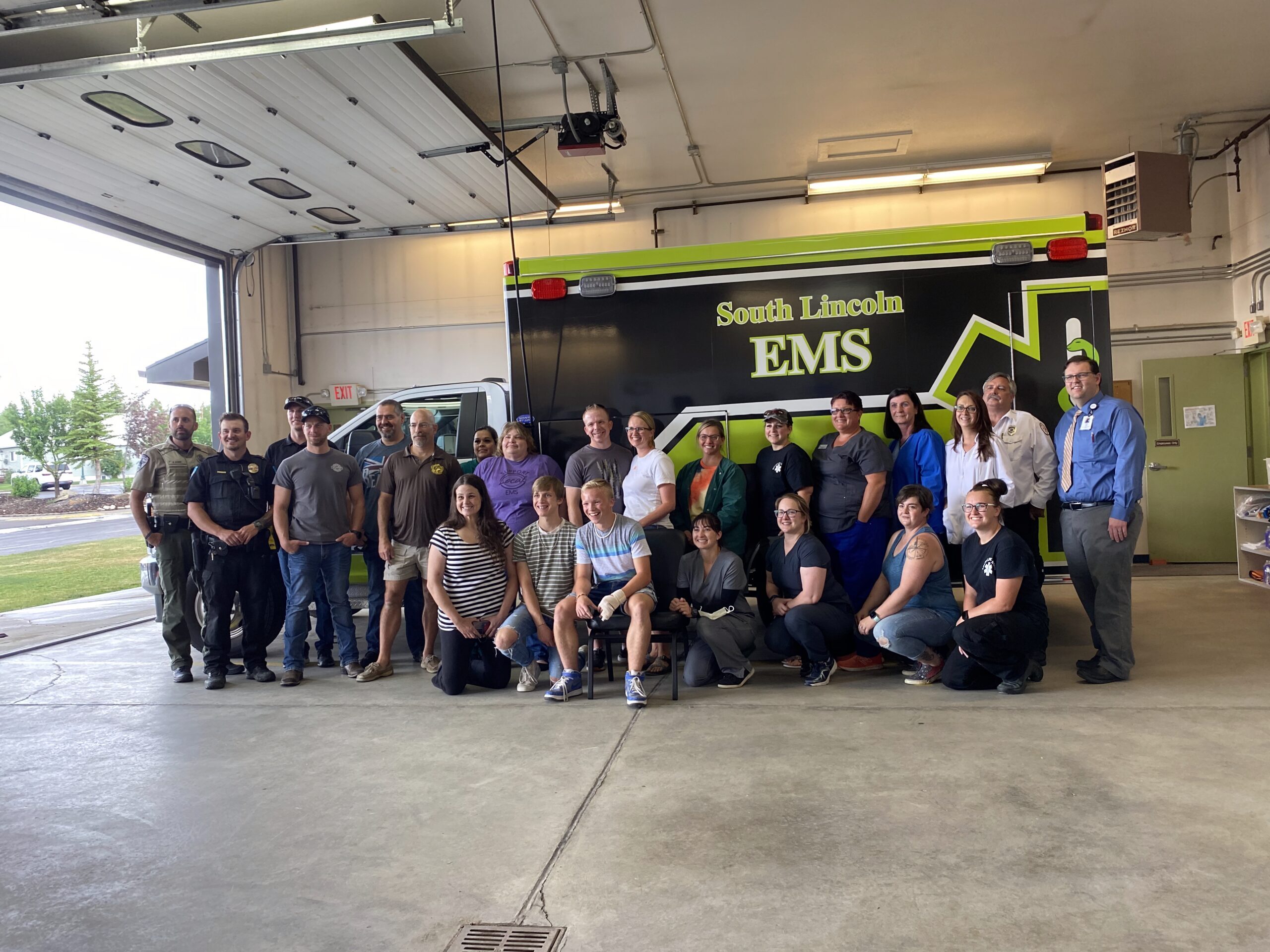
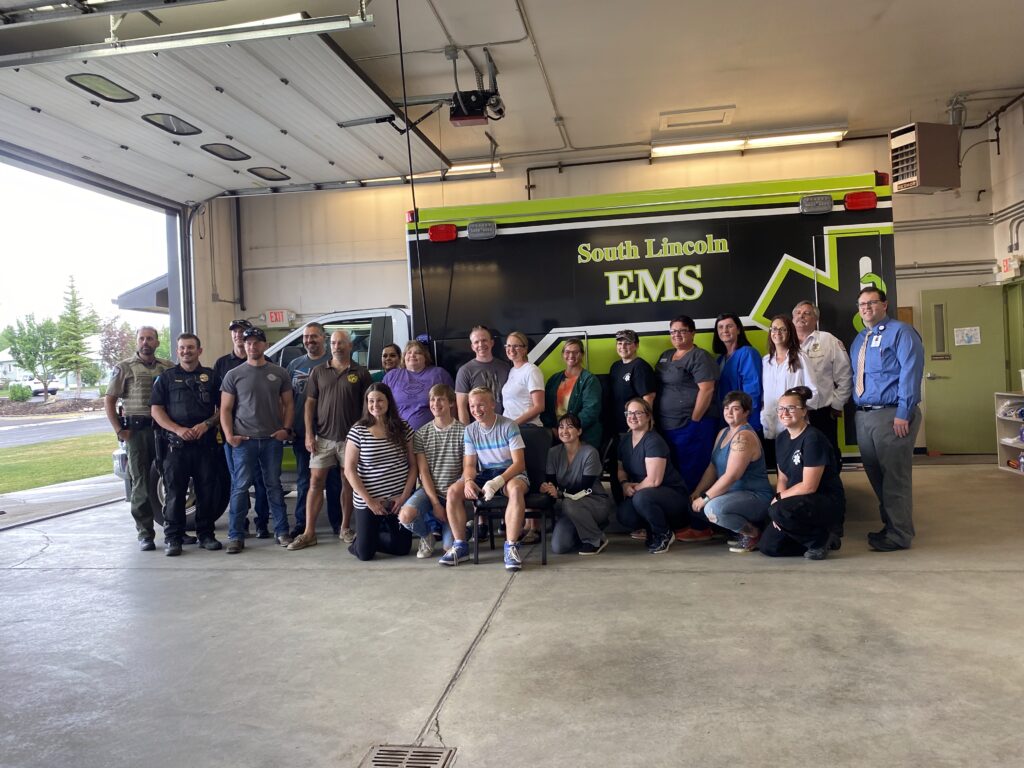
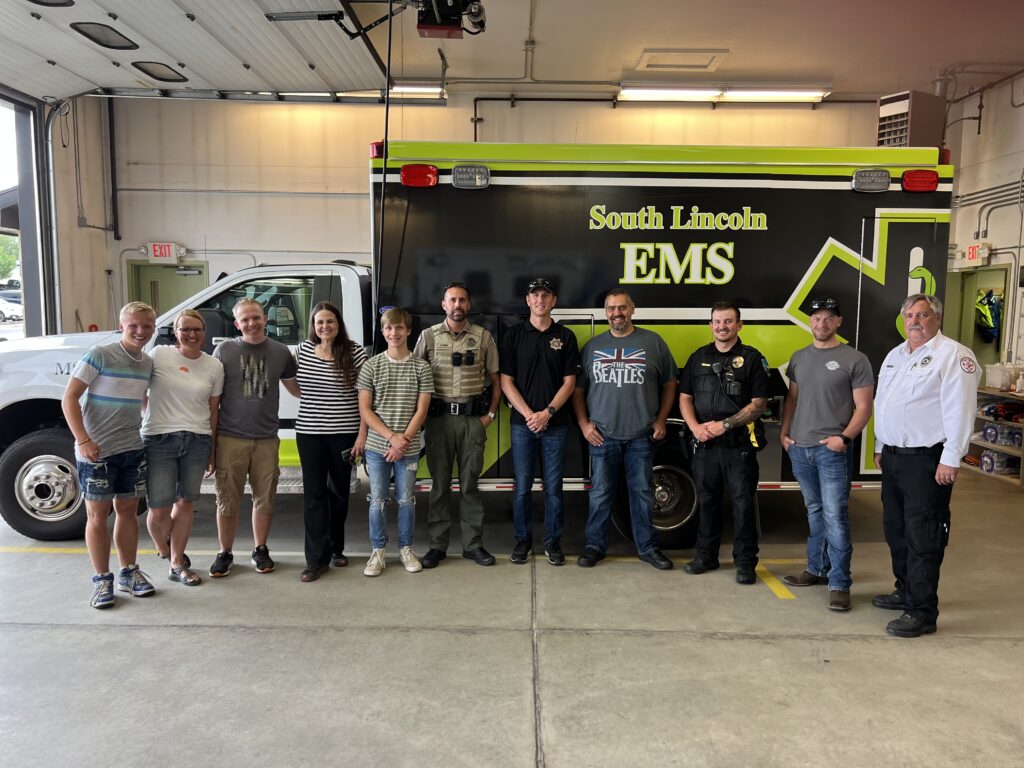
1 Year Anniversary: Expressing Gratitude to First Responders and Medical Teams

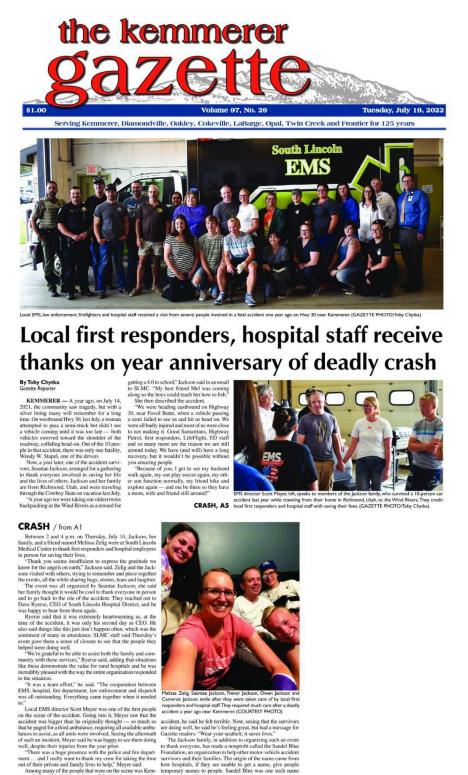
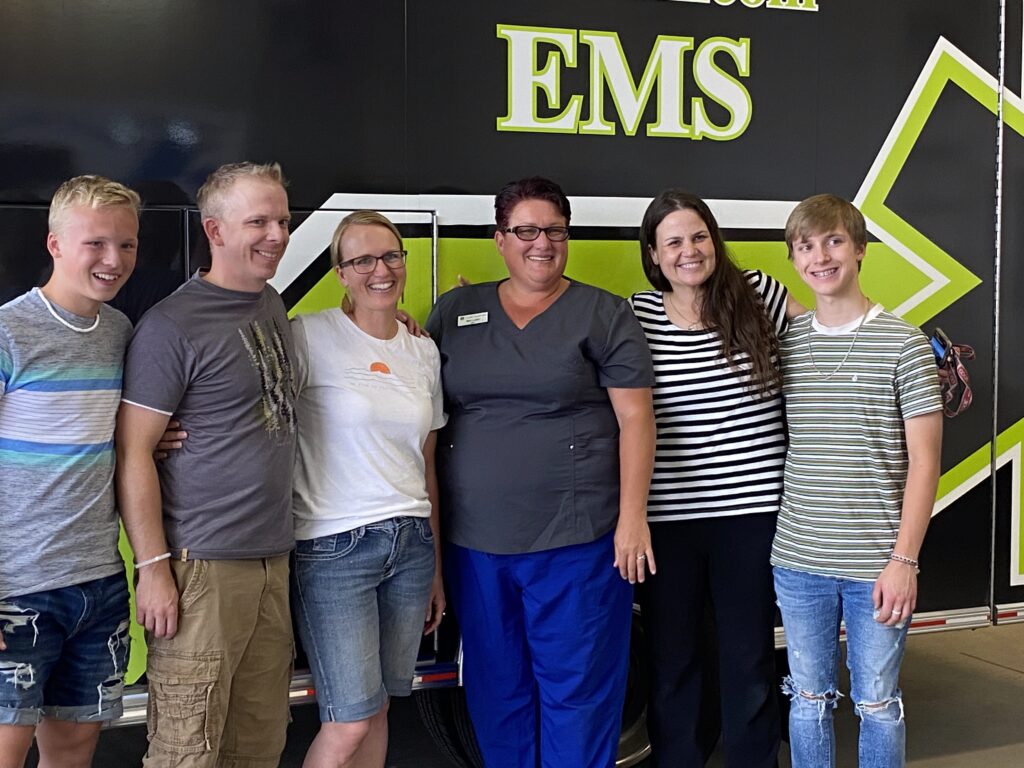
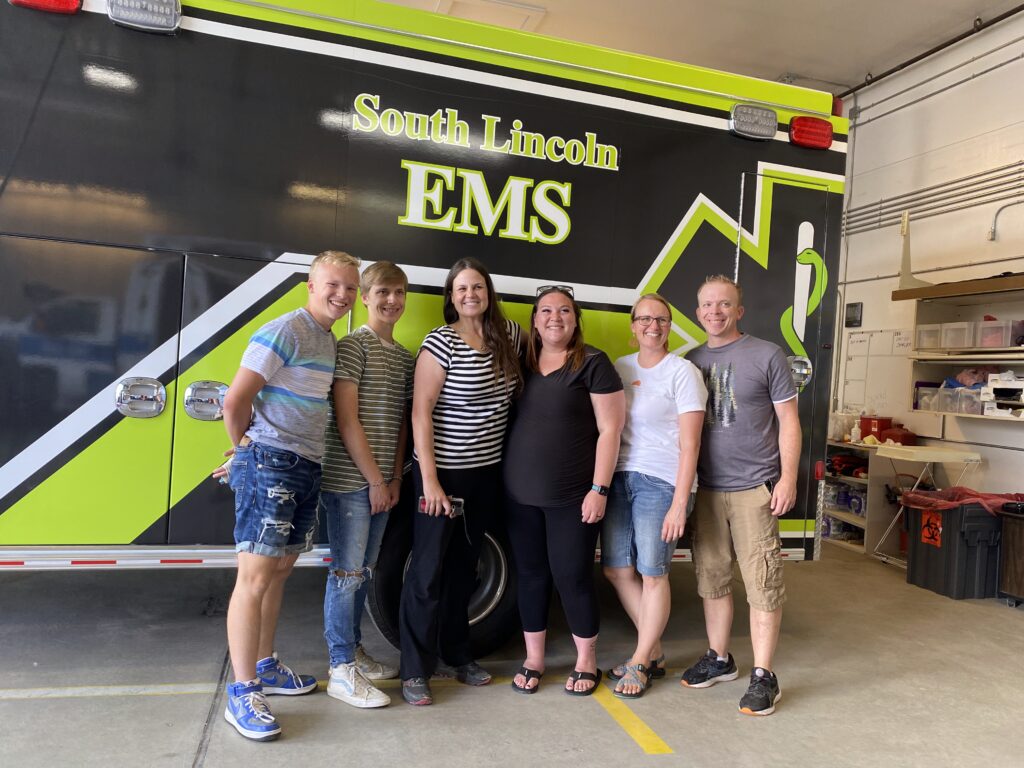
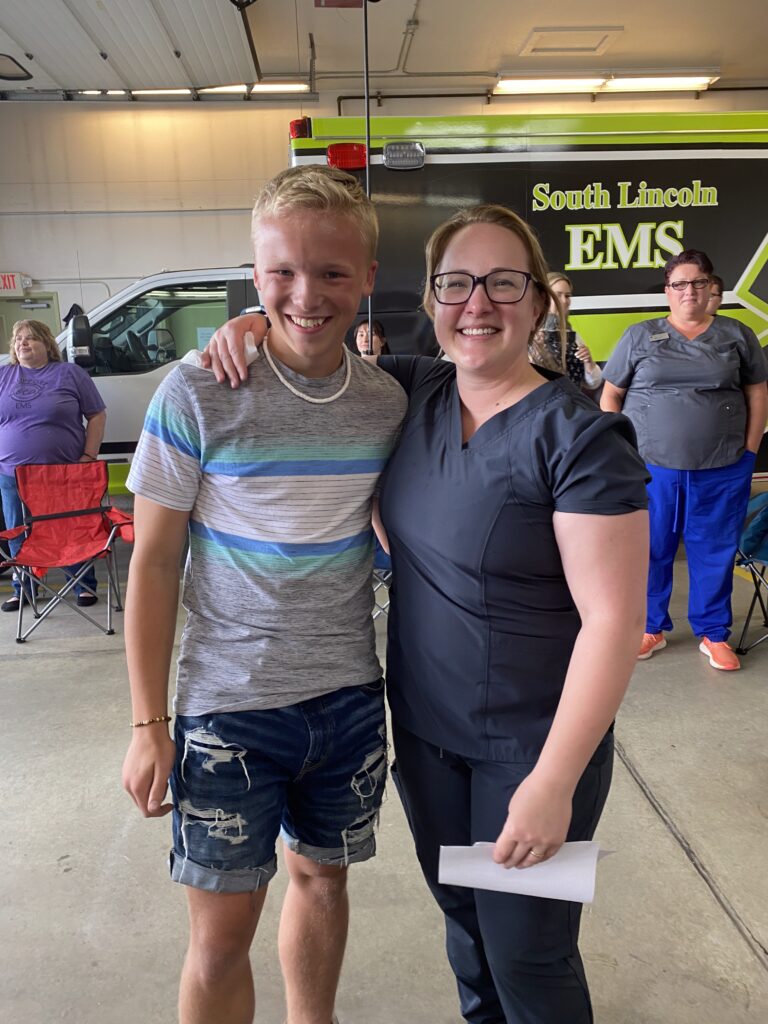
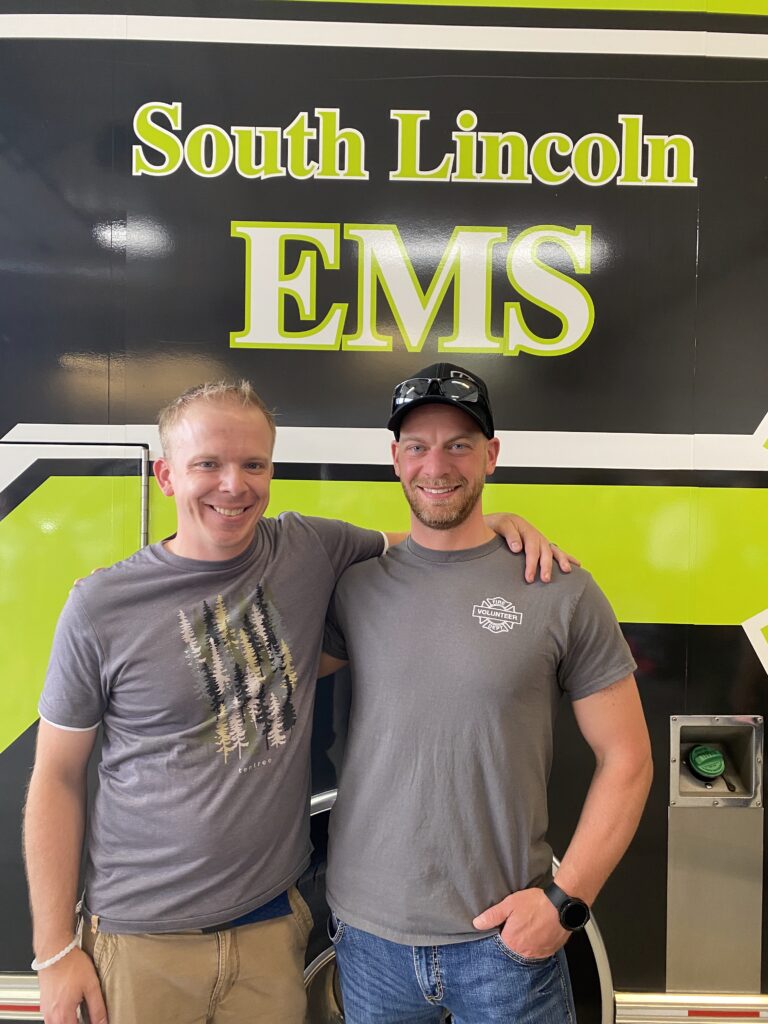
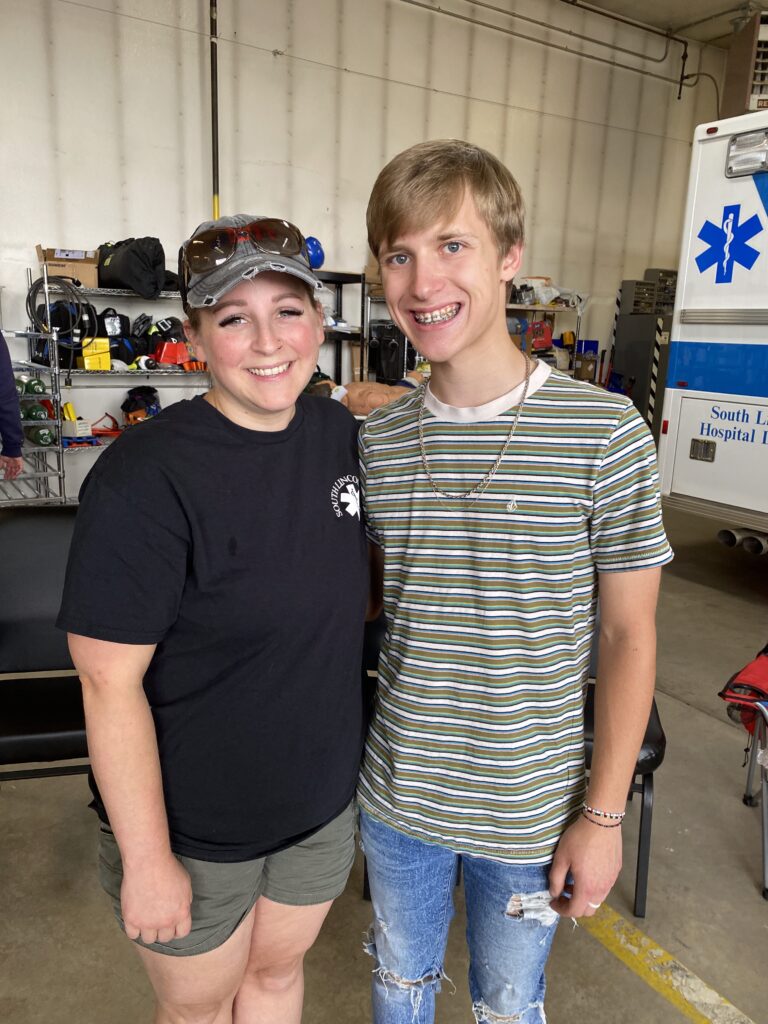
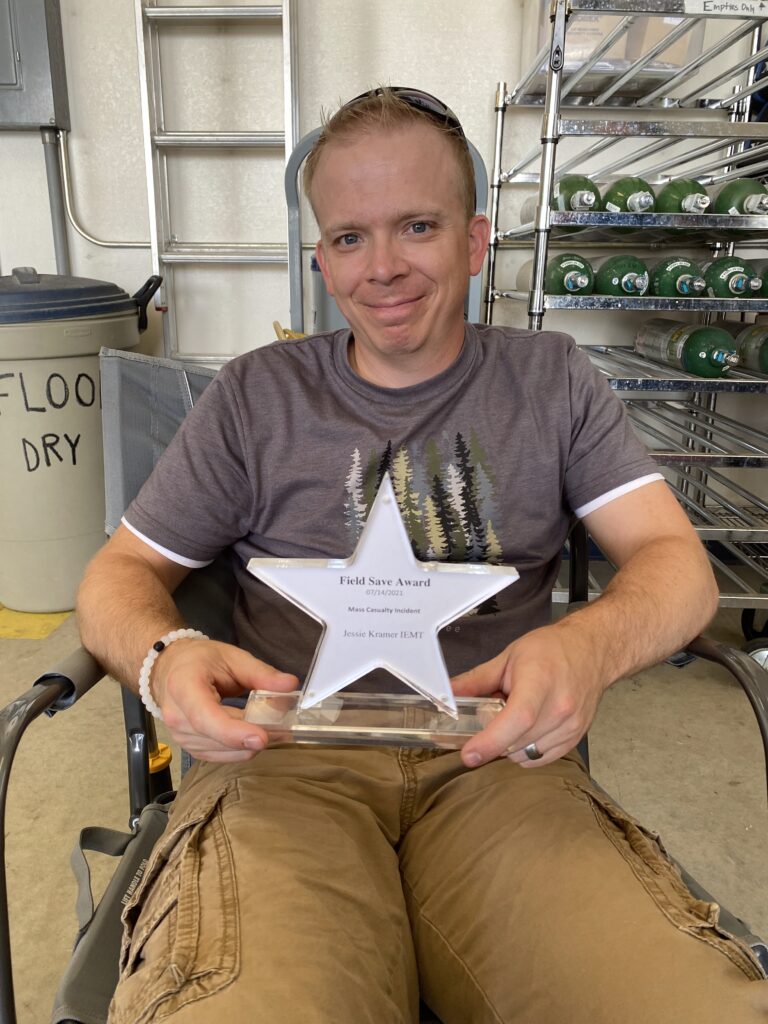
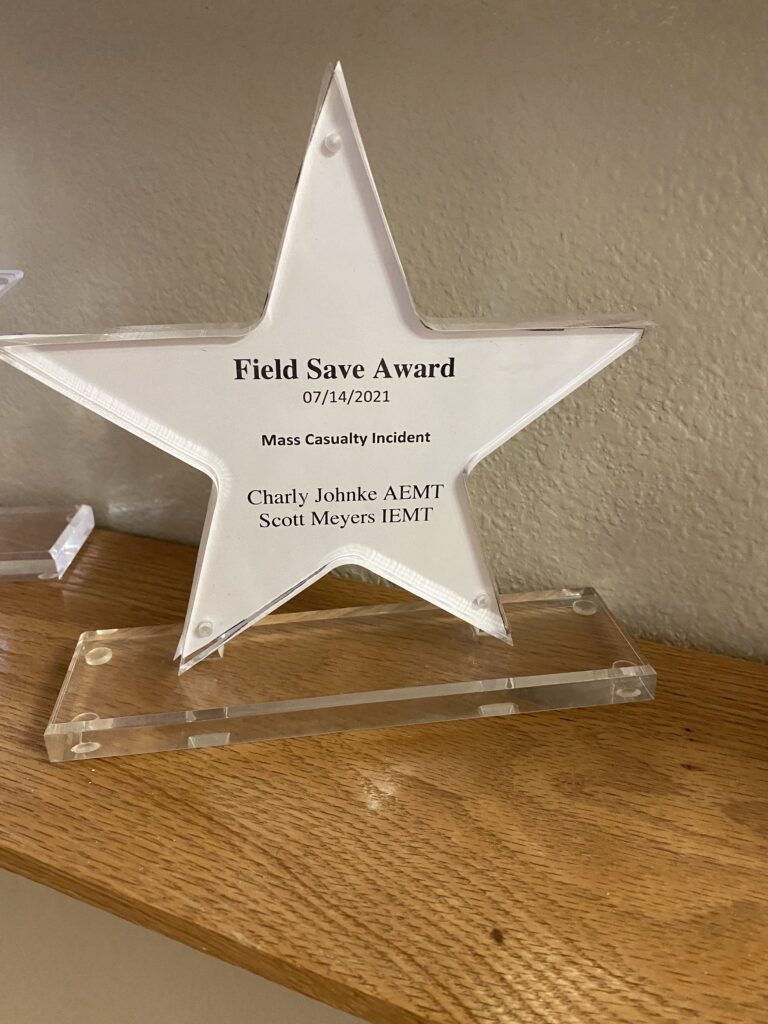
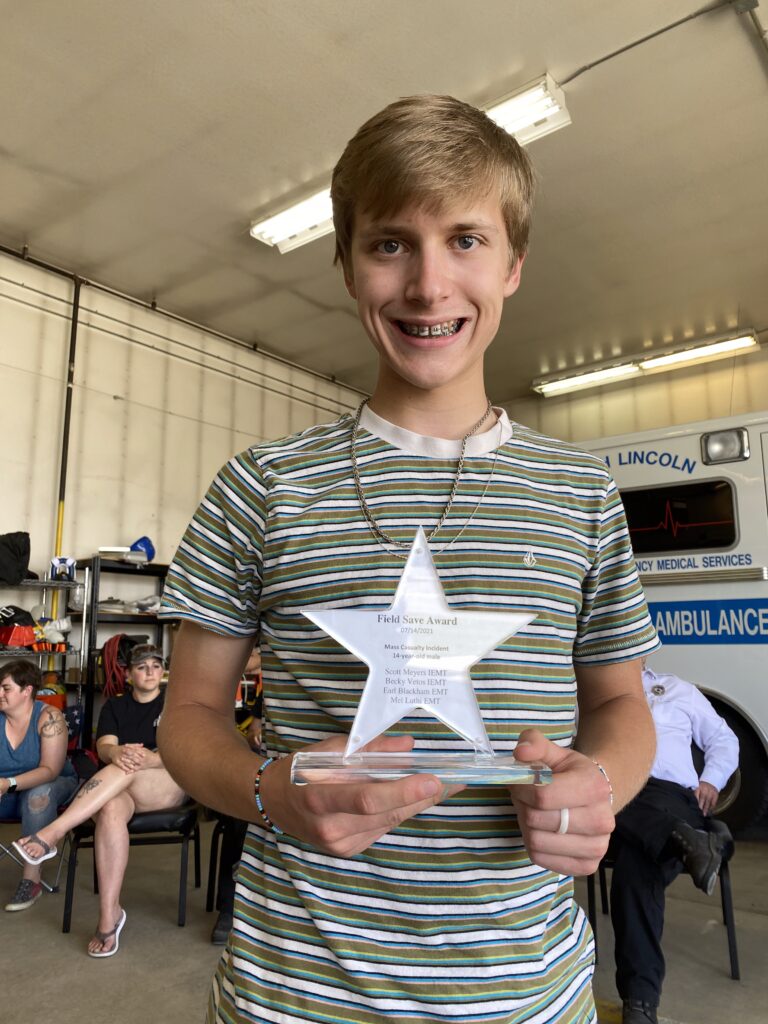
One year after the catastrophic car wreck, the Jackson family and friend returned to express their gratitude to the first responders and hospital staff who played a critical role in saving their lives. This moment marked not only a milestone in recovery, but an opportunity to personally thank those who showed up in their most difficult hours.

This story was featured in the Kemmerer Gazette, highlighting the impact of that day and the lasting appreciation for the individuals who made survival and healing possible.

A full-circle moment of gratitude for the people who were there when it mattered most.

Behind the Scenes: One Year Later

We will never forget the people who showed up that day – and continue to carry deep gratitude for the role they played in our story!

Inpatient Rehab
Media and Features

Featured by Primary Children’s Hospital Acute Inpatient Rehab

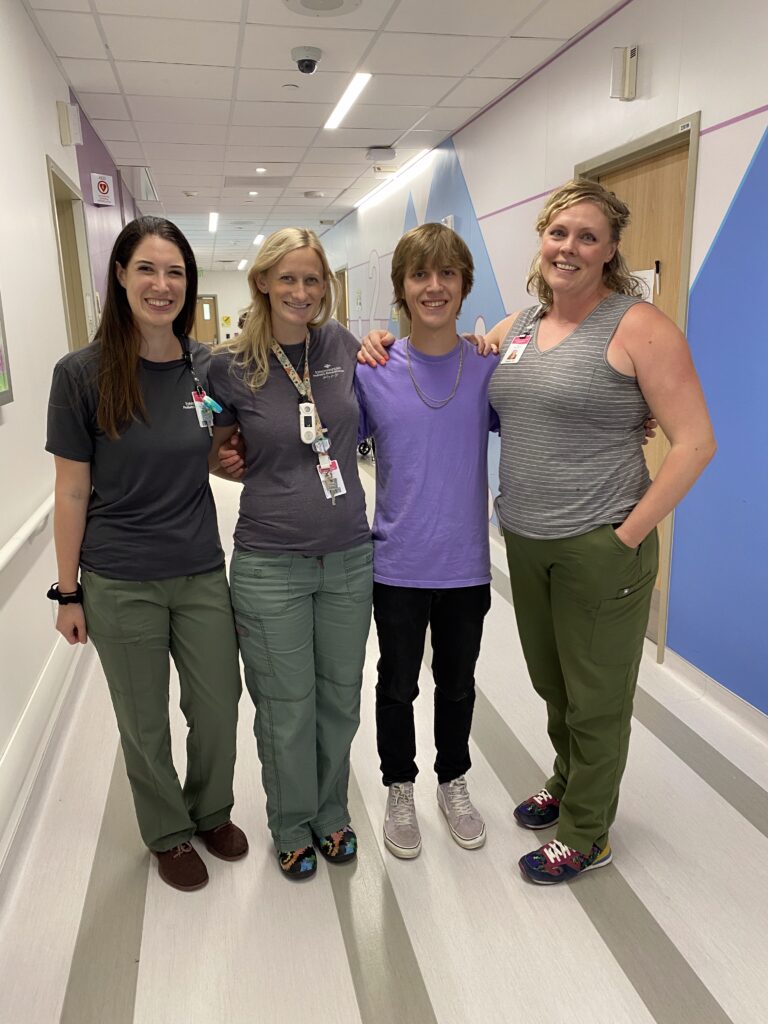
Owen and Seantae Jackson were featured by the Acute Inpatient Rehabilitation team at Primary Children’s Hospital, sharing their experience during Owen’s recovery. This interview highlights the impact of specialized care, the challenges of rehabilitation, and the people who make healing possible.

A glimpse into the strength, support, and care that shape the recovery journey.

Behind the Scenes at Primary Children's Hospital

We’re grateful for the team at Primary Children’s Hospital and the role they played in Owen’s recovery!

KSL 5
Media and Features

Live Interview on KSL Channel 5 News with Shara Park

The Jackson family joined KSL Channel 5 News for a live interview with Shara Park to share their personal story and help raise awareness during the 100 Deadliest Days of Summer. In partnership with the Zero Fatalities campaign, this conversation highlights the real and lasting impact of motor vehicle incidents and the importance of making safe choices on the road.

A powerful reminder of how quickly life can change – and why safe choices on the road matter.

Behind the Scenes at KSL

"In 3-2-1"
"How do you pronounce Seantae?"

We’re grateful for opportunities like this to share our story and advocate for survivors and their families!

Caregiving
Resource ConversationsSupport and Caregiving

Caregiving After Trauma

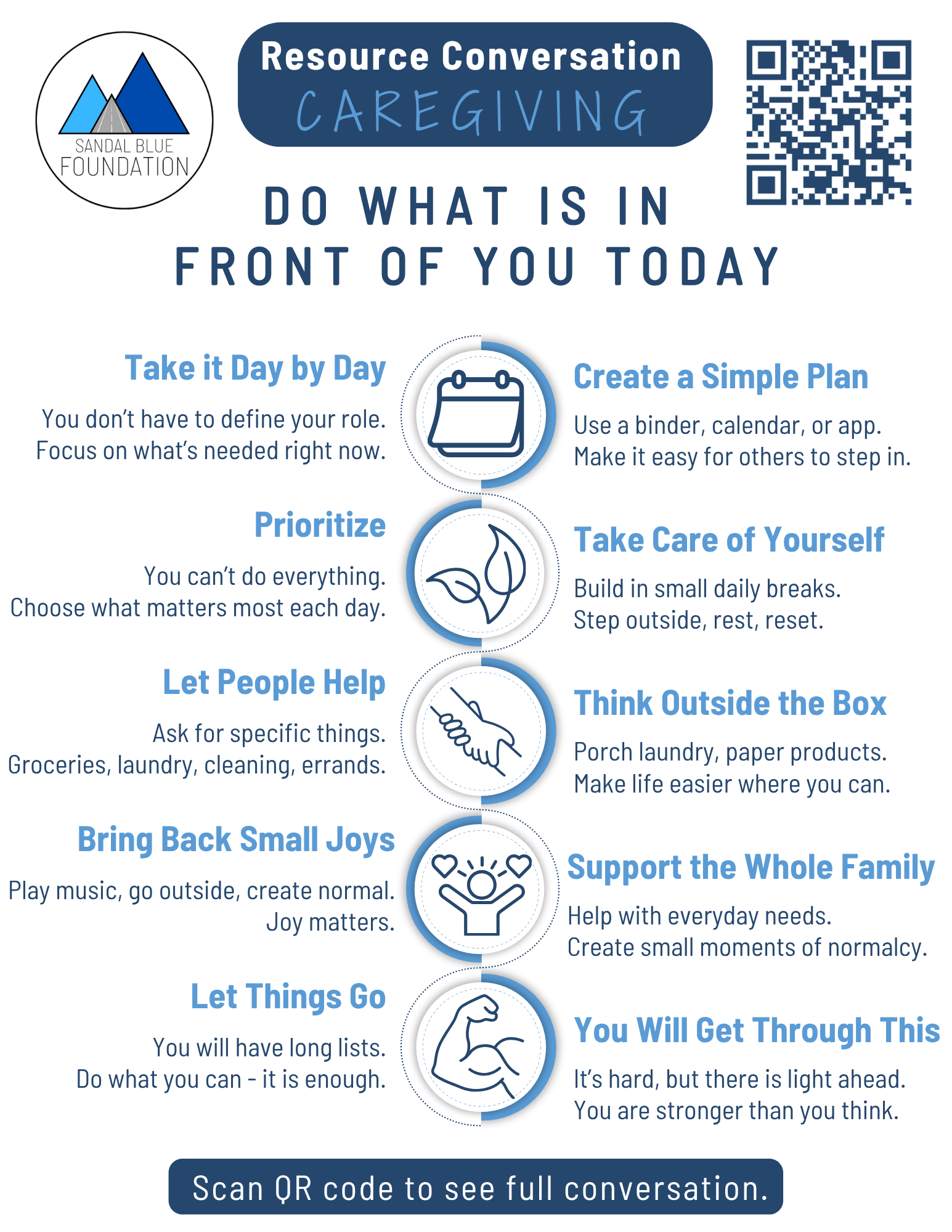
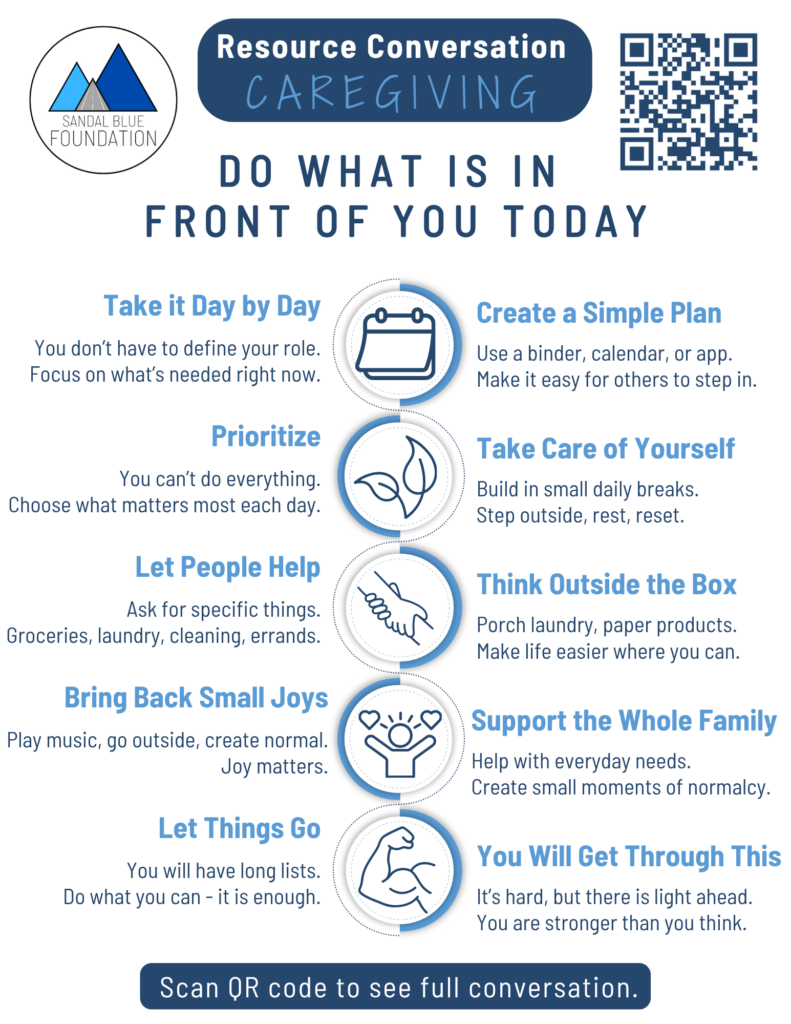
Caregiving After Trauma: Doing What’s in Front of You

Caregiving after a traumatic event is something no one can fully prepare for. One day your role looks one way, and the next it’s completely different. You may find yourself stepping into responsibilities that feel unfamiliar—medical, emotional, physical—all at once.

And the truth is, you may not be able to clearly define your role.

That’s okay.

Instead of trying to figure out the entire road ahead, focus on what’s right in front of you today. Caregiving often becomes a practice of going with the flow—responding to what’s needed in the moment, even when it’s outside your comfort zone.

Create a System That Supports You

When multiple people are involved in caregiving, communication and organization matter.

One simple, effective idea is to create a shared binder in the home:

  • Include calendars for each person being cared for
  • Write in daily schedules, appointments, and needs
  • Keep it in a central place so anyone helping can easily step in

Your system doesn’t have to be perfect—it just has to work for you.

For some, that might look like a paper calendar. For others, it’s a shared digital calendar or app. The goal is to create something that allows continuity of care, especially if you need to step away or others are helping carry the load.

Prioritize (and Let Some Things Go)

Your to-do list will likely feel endless.

But here’s the reality: it is too many things.

Each day, choose what matters most. Focus on what truly needs to be done, and give yourself permission to let other things wait. Prioritizing isn’t about doing everything—it’s about doing what matters most right now.

Take Care of the Caregiver

You cannot pour from an empty cup.

Even in the middle of everything, it’s essential to build in time for yourself each day—even if it’s small.

That might look like:

  • Taking a bath
  • Reading a few pages of a book
  • Going for a short walk
  • Stepping outside for fresh air

If leaving isn’t possible, simply changing rooms or finding a quiet moment can help reset your nervous system.

Caring for yourself isn’t a luxury—it’s what allows you to continue showing up.

Invite Help (and Think Outside the Box)

You are not meant to do this alone.

When people ask how they can help, it’s okay to give them real, tangible ways to step in. Sometimes that requires thinking creatively:

  • Have someone pick up and deliver groceries
  • Ask for help with school shopping for kids
  • Set laundry on the porch for someone to wash and return
  • Arrange for a cleaner to come help once survivors are home

Even small things—like providing paper products to reduce dishes—can make a meaningful difference.

Letting people help doesn’t make you less capable. It makes the load more sustainable.

Bring Moments of Joy Back In

In the middle of survival, it’s easy to lose sight of what feels normal or joyful.

Look for simple ways to bring that back:

  • Play music in the house
  • Dance in the kitchen
  • Do the things that once made your family smile

These moments won’t fix everything—but they can bring light into heavy days.

Even something like getting a haircut or doing a small “normal” activity can help restore a sense of self and emotional well-being.

Support the Whole Family

Caregiving isn’t just about the survivor—it’s about the entire family system.

Think about ways to ease the load for everyone:

  • Help children feel prepared with clothes or school supplies
  • Take care of tasks that often go unnoticed but add stress
  • Create small pockets of normalcy where you can

Every bit of support matters.

Managing the Long Road Ahead

Caregiving after trauma isn’t a short-term role for many—it’s a journey.

Managing stress is essential for the long haul:

  • Step outside when you can
  • Breathe deeply
  • Change your environment, even briefly

And remind yourself often: you don’t have to do everything.

A Final Reminder

This is hard.

There’s no way around that.

But there is also hope.

There is light at the end of the tunnel—even if you can’t see it yet.

People are more resilient than they realize. That includes the person you’re caring for, your family, and you.

Take it one day at a time.
Do what you can.
Let that be enough.

And most importantly—let people help.

Watch the full conversation as Tina shares simple, real life ways to navigate caregiving after trauma, including staying organized, asking for help, and taking care of yourself along the way.

Communication Specialist
Resource ConversationsSupport and Caregiving

The Power of a Communication Specialist

When Everything Feels Overwhelming: The Power of a Communication Specialist

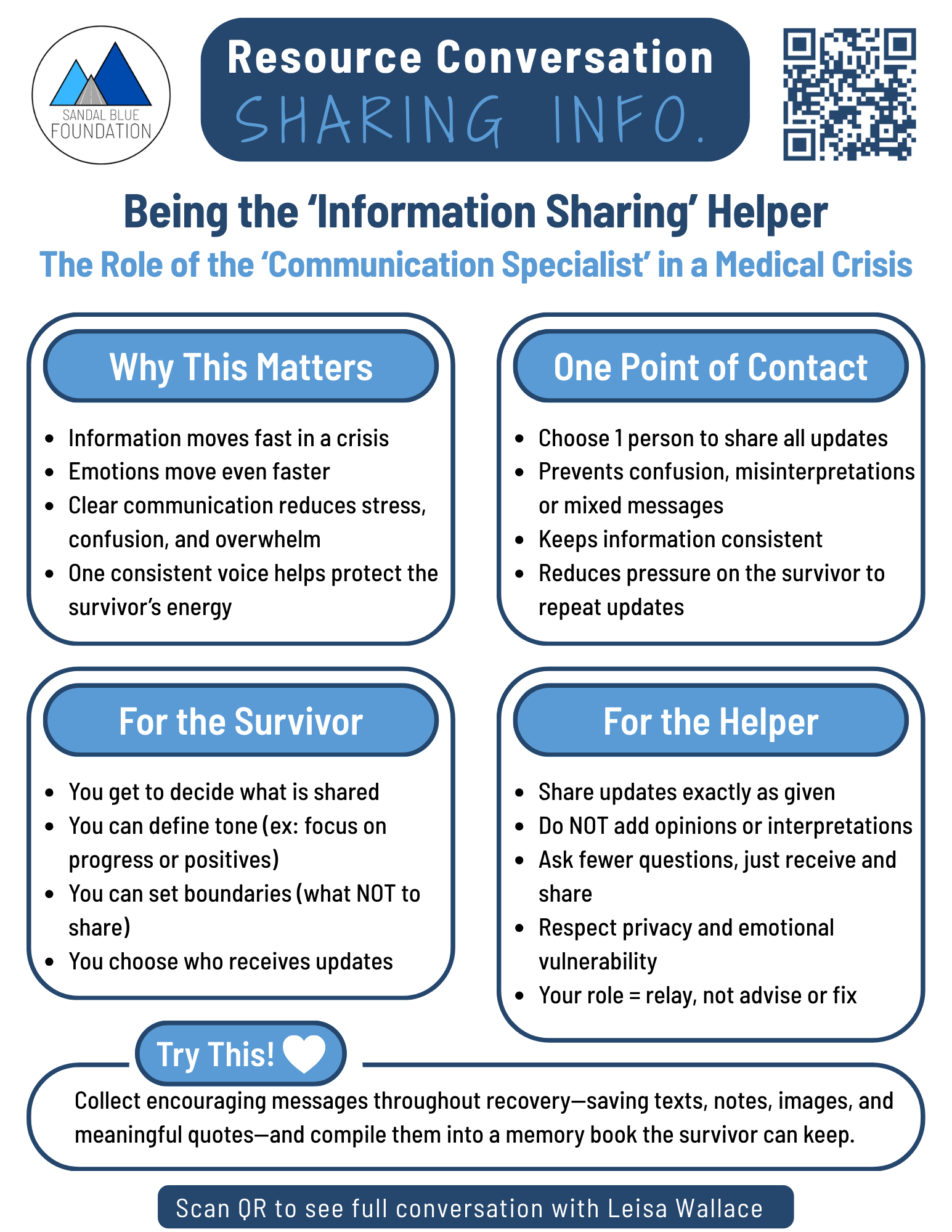
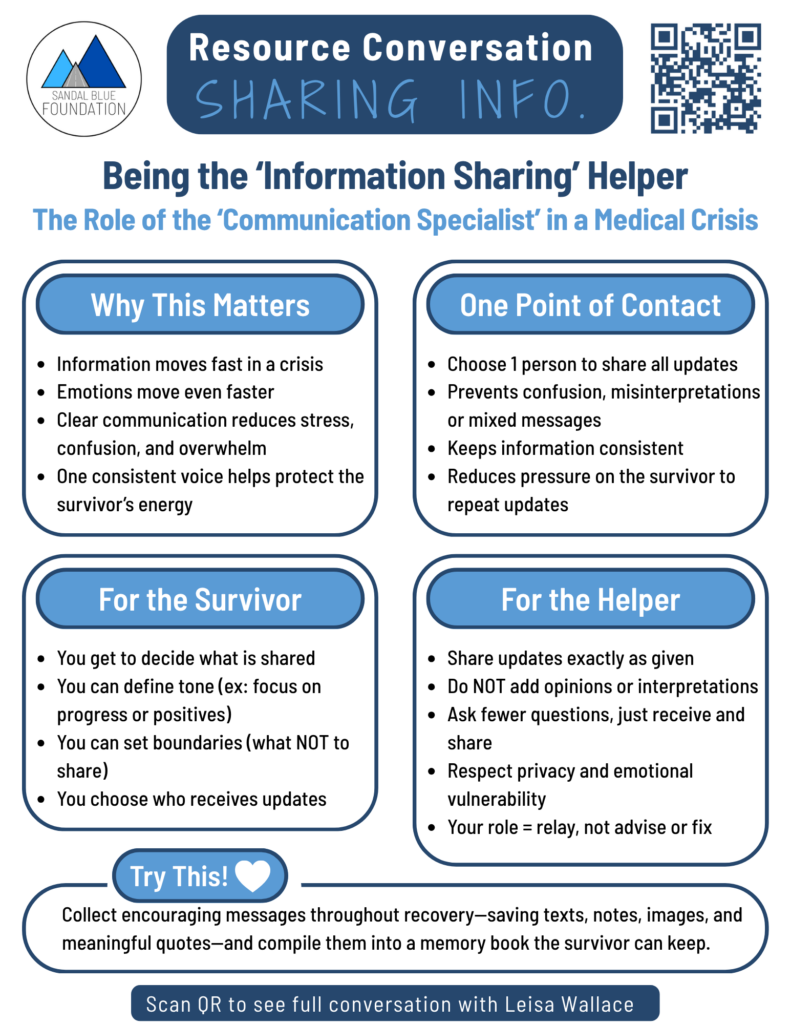
In the middle of a medical crisis, information moves fast… and emotions move even faster.

People care deeply and want updates. Phones are buzzing. Questions are coming in. And for the survivor (and their closest family), even answering a simple “How are things?” can feel like too much.

This is where having a communication specialist can make a meaningful difference.

Not someone to manage the situation — but someone to hold the flow of communication with care, clarity, and consistency.

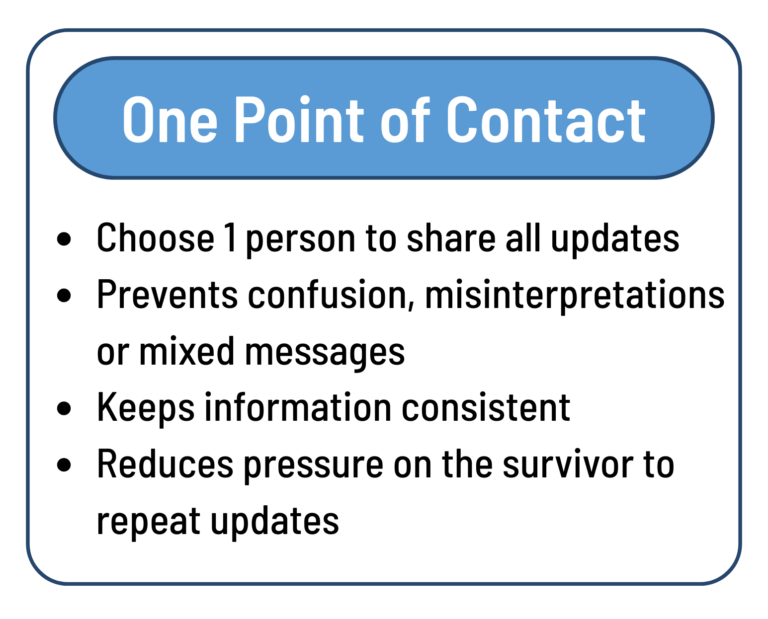
Why One Point of Contact Matters

When multiple people are sharing updates, even with the best intentions, things can quickly become confusing or miscommunicated.

Having one person responsible for updates:

  • Keeps information consistent and accurate
  • Reduces the risk of details getting unintentionally changed
  • Creates a predictable rhythm for sharing
  • Protects the survivor from having to repeat their story over and over

It becomes a simple, steady system in the middle of uncertainty.

Often, updates are shared through a group text thread or a central platform — making it easier for people to stay informed without overwhelming the survivor.

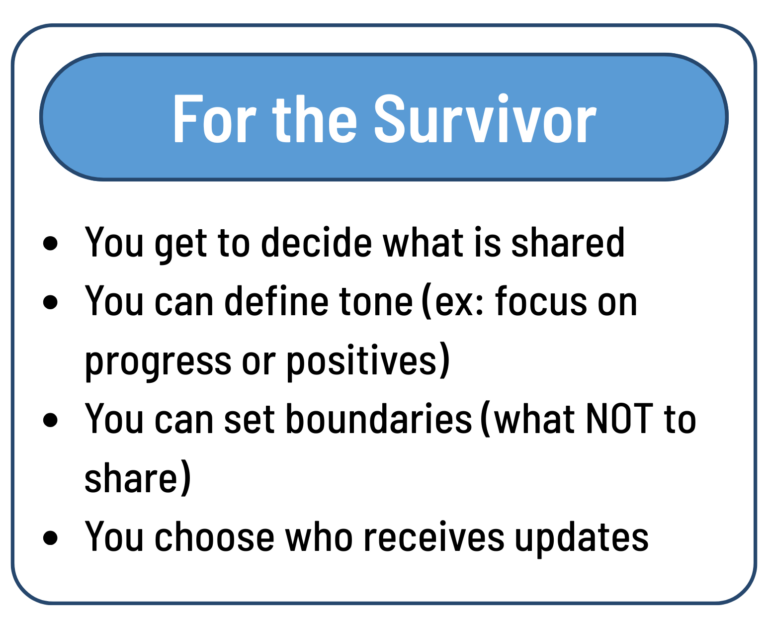
For the Survivor: Setting the Tone

One of the most important (and empowering) things a survivor can do is set expectations for how updates are shared.

In a situation that can feel completely out of control, this is one way to regain a sense of ownership.

You might consider:

  • What do you want included in updates?
  • What do you want left out?
  • What tone feels right for you? (For example: focusing on progress or positives)
  • Who should receive updates — and who shouldn’t?

It’s okay to be specific.
It’s okay to change your mind.
And it’s okay to ask for things to be shared in a way that feels aligned with you.

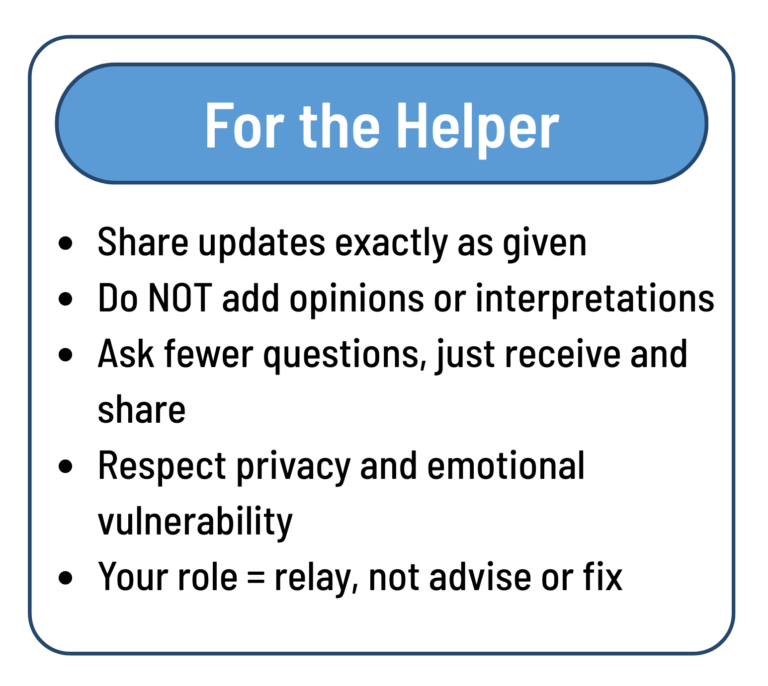
For the Helper: What This Role Really Means

Being the communication specialist is not about having the right words.

It’s about respecting the survivor’s voice and reflecting it back to others.

A few guiding principles:

  • Share, don’t interpret. Avoid adding opinions, assumptions, or extra meaning.
  • Follow their lead. Share what they want shared — nothing more, nothing less.
  • Limit questions. Your role isn’t to gather information, but to pass along what’s given.
  • Honor the vulnerability. This information is deeply personal. Be mindful of who it’s shared with.
  • Let it be simple. Updates don’t need to be perfect. People just want to know what’s going on.

Most importantly:
Your job is not to fix, advise, or manage. Your job is to love them — and communicate for them.

When Should Updates Be Shared?

As soon as information is available.

People who care are often waiting and checking in, hoping for news. Sharing updates in real-time (or as close to it as possible) helps ease that uncertainty.

Some people choose to:

  • Share updates as they come
  • Transition to daily summaries once things stabilize
  • Organize updates by individual if multiple people are involved

There’s no one “right” way — just what works best for the situation.

A Helpful Tool to Consider

One platform that many families find helpful is CaringBridge.

It’s a free site designed specifically for sharing updates during medical journeys. Some features include:

  • Time-stamped updates
  • The ability to post photos and videos
  • A space for others to leave comments and encouragement
  • Options to keep the page public or private

A quick note: the platform is donation-based. If you’re hoping to financially support the survivor, double-check that your donation is going directly to them — not just the platform

A Meaningful Idea to Hold Onto

In the middle of hard days, there are often small moments of light — encouraging messages, thoughtful texts, reminders of hope.

One beautiful way to preserve that:

  • Have the survivor send you meaningful messages, quotes, or images they receive
  • Save and compile them over time
  • Turn them into a printed book or keepsake

It becomes something they can return to — a reminder of how supported and loved they were through it all.

Final Thought

Communication might seem like a small piece of the puzzle… but in moments of crisis, it carries so much weight.

When done with intention, it:

  • Protects the survivor’s energy
  • Keeps loved ones connected
  • Creates clarity in the chaos

And most importantly — it reminds everyone involved that even in the hardest moments, no one is walking through it alone.

In this conversation, we explore how having a designated communication specialist can help protect a survivor’s energy, bring clarity to loved ones, and create a more thoughtful and consistent way of sharing updates during a medical crisis.

Supporting Your Nervous System After Trauma
Post-Trauma LifeResource Conversations

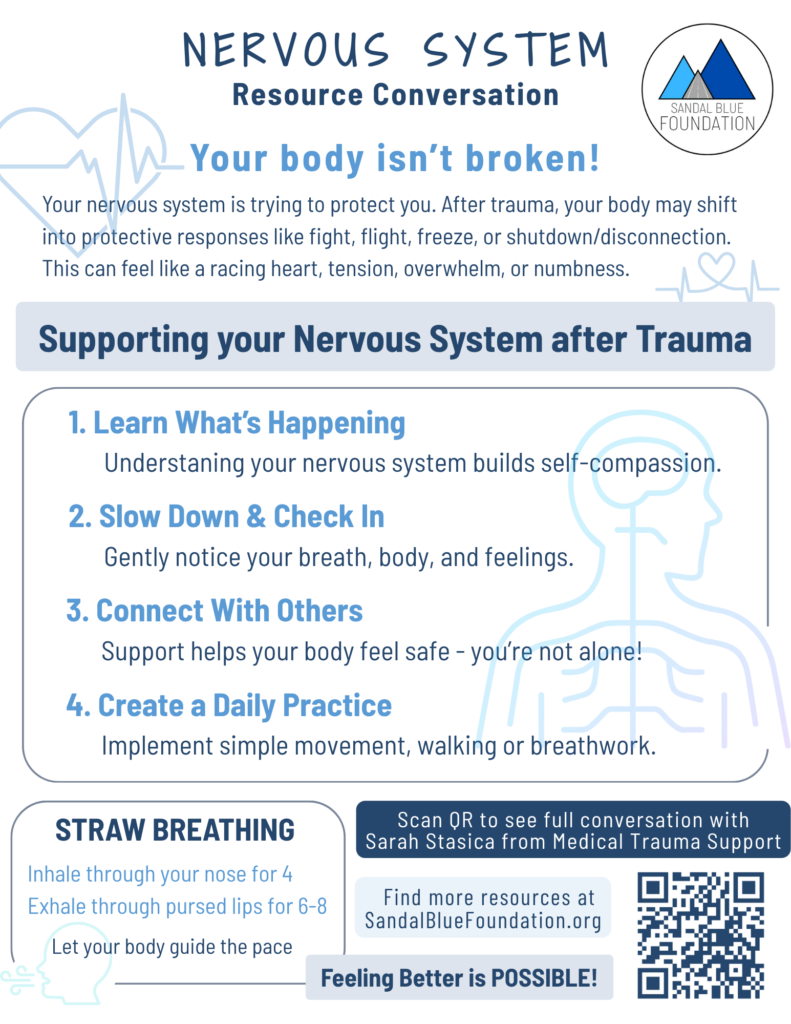
Supporting Your Nervous System After Trauma – Resource Conversation

Supporting Your Nervous System After Trauma

A Resource Conversation with Sarah Stasica from Medical Trauma Support

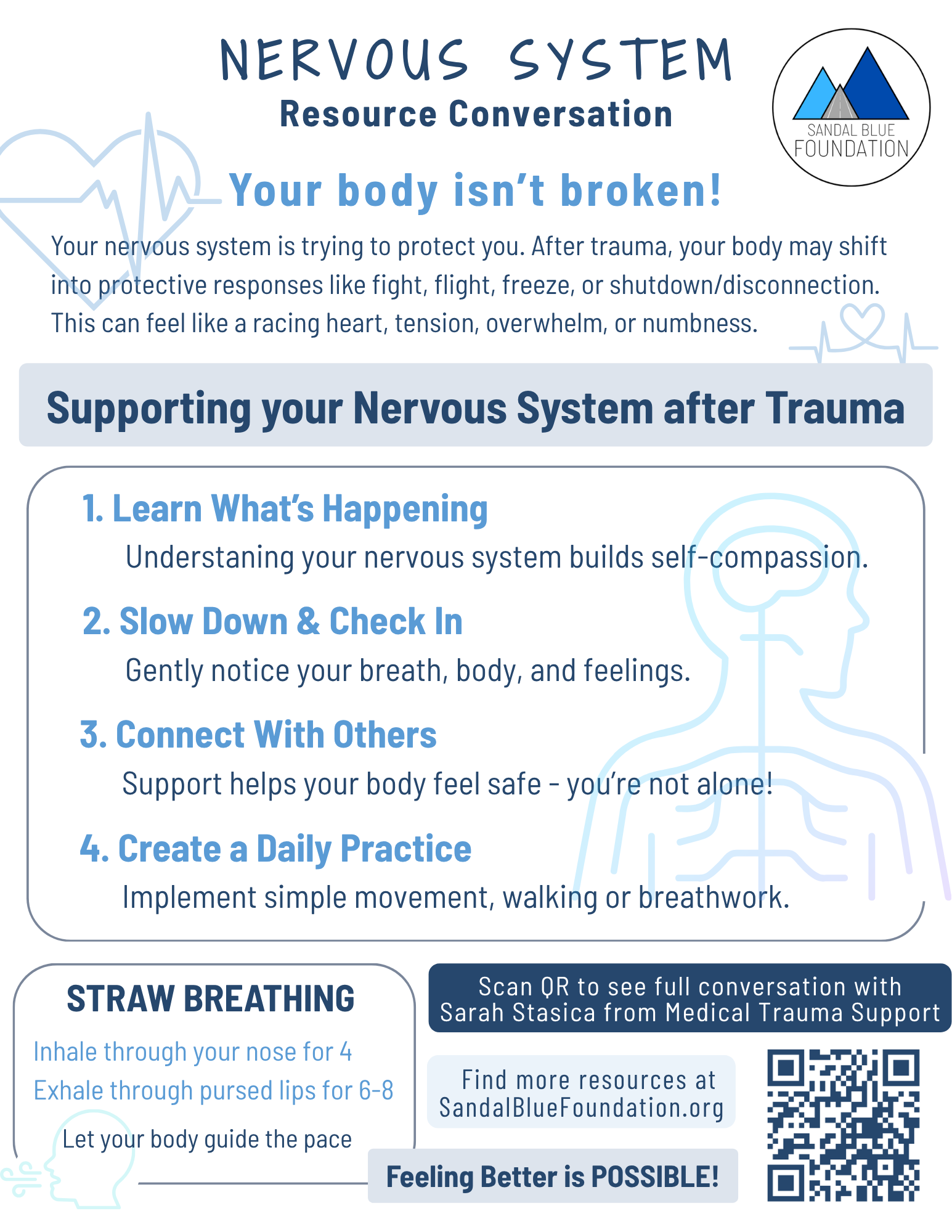
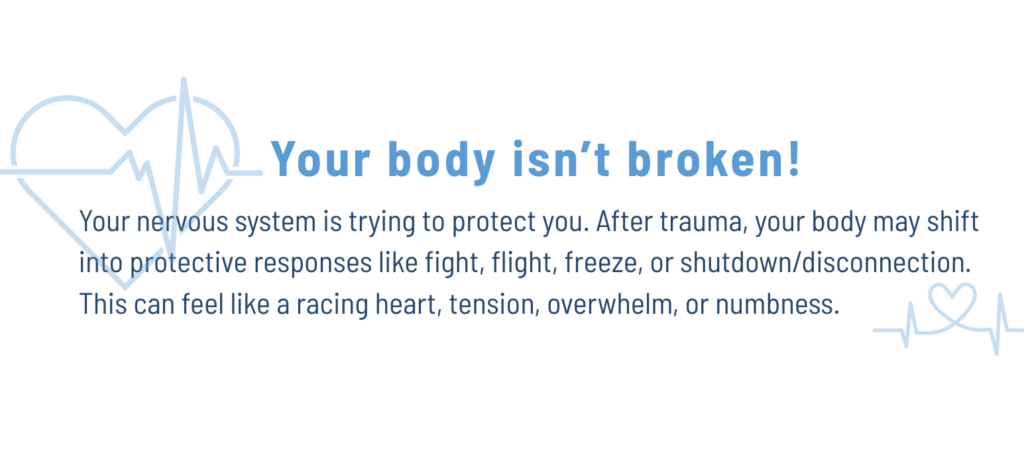
After trauma, it’s common to feel like your body is working against you.

A racing heart. Tight muscles. A sense of panic—or, on the other end, feeling shut down, disconnected, or numb.

These responses can feel confusing, especially when there isn’t immediate danger. But what if your body isn’t broken… just trying to protect you?

In this resource conversation, we explored how the nervous system works, why these responses happen, and most importantly—what you can gently do over time to support your healing.

Understanding the Nervous System (in a simple way)

The part of the nervous system we focused on is the autonomic nervous system—the system that runs automatically, without you needing to think about it.

It has two main branches:

  • Sympathetic (the “gas”)
    This is your mobilization system—fight, flight, or action.
  • Parasympathetic (the “brake”)
    Often called “rest and digest,” this is where your body can slow down, recover, and heal.

A key player here is the vagus nerve, which makes up a large part of the parasympathetic system. When we stimulate the vagus nerve, we help the body move toward a state where healing is possible.

Your Body Is Always Scanning for Safety

Your nervous system has one main job: keep you safe.

It’s constantly scanning for signs of danger and safety—a process called neuroception.

This happens in a few ways:

  • Inside your body (interoception):
    Is your heart racing? Are your muscles tight? Are you hungry or exhausted?
  • Your environment:
    Does this place feel familiar? Uncertain? Safe?
  • The people around you:
    Do they feel safe, predictable, and supportive?

When your nervous system senses danger, it can automatically shift into protective responses like:

  • Fight
  • Flight
  • Freeze
  • Collapse
  • Fawn

These are not choices—they are automatic responses designed to protect you.

What Safety Actually Feels Like

Safety isn’t just something you know—it’s something your body feels.

This “felt sense of safety” is often sensory:

  • A familiar smell
  • A calm voice
  • A supportive presence
  • A space that feels predictable

After trauma, your system may become more sensitive to danger cues. But the hopeful truth is this:

We can also help the nervous system learn to recognize safety again.

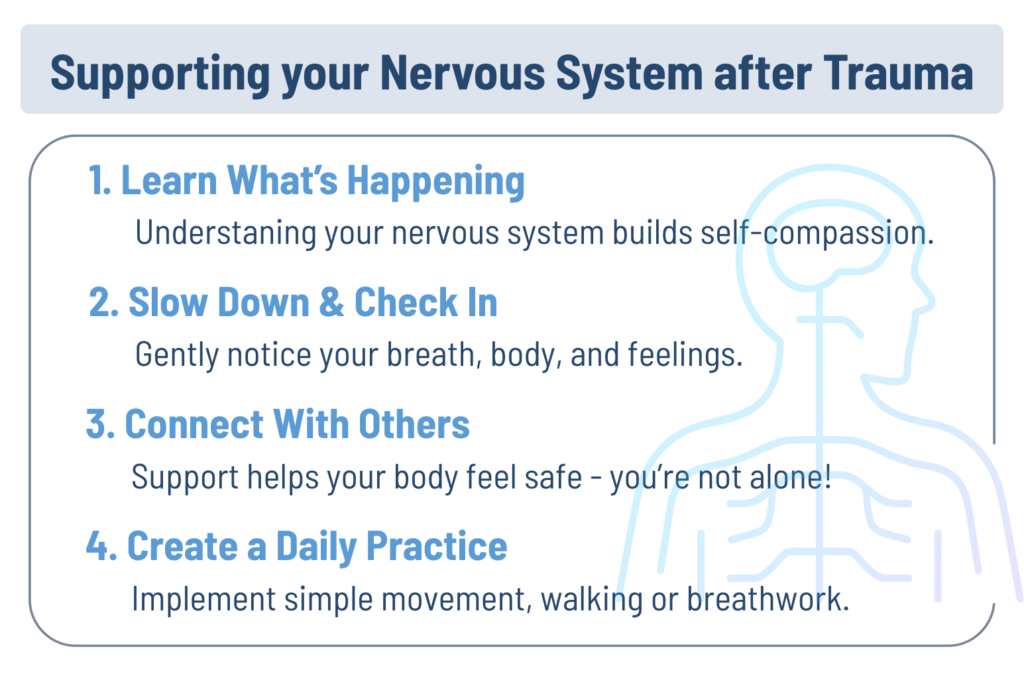
Four Small Daily Practices to Support Your Nervous System

There are many ways to support your nervous system, but we’re focusing on four simple, manageable practices you can build into everyday life.

1. Learn the Basics of Your Nervous System

Understanding what’s happening in your body can be incredibly empowering.

When you recognize that your responses are protective—not broken—you can begin to meet yourself with more compassion instead of frustration.

2. Slow Down and Check In With Yourself

Slowing down can feel challenging—especially after trauma.

In fact, many people need support (like a therapist or trusted person) when they first begin this process.

But gently checking in might look like:

  • Noticing your breath
  • Asking, “What am I feeling right now?”
  • Observing sensations without trying to change them

This is similar to mindfulness—being present with yourself, even in small moments.

3. Seek Support and Connection

Healing is not meant to happen in isolation.

Connection with others creates co-regulation, where your nervous system can begin to feel safe through being with safe people.

Support might look like:

  • A therapist
  • A support group
  • A trusted friend or community

This can help reduce isolation and shame—and remind you that:
there is nothing “wrong” with you, and you are not alone in what you’re feeling.

4. Create a Simple Daily Practice

Consistency matters more than complexity.

A daily practice helps your nervous system regulate over time.

This could include:

  • Walking (even a short daily walk)
  • Gentle movement like stretching, dancing, or shaking
  • Breathwork
  • Time outside

Movement, in particular, helps release excess energy your body has mobilized during stress.

Simple Practices You Can Try

Here are a few gentle ways to begin supporting your system:

Orienting

Slowly look around your environment.
Let your eyes move to the horizon, then gently scan side to side, noticing where you are.

This helps your nervous system recognize: I am here. I am safe right now.

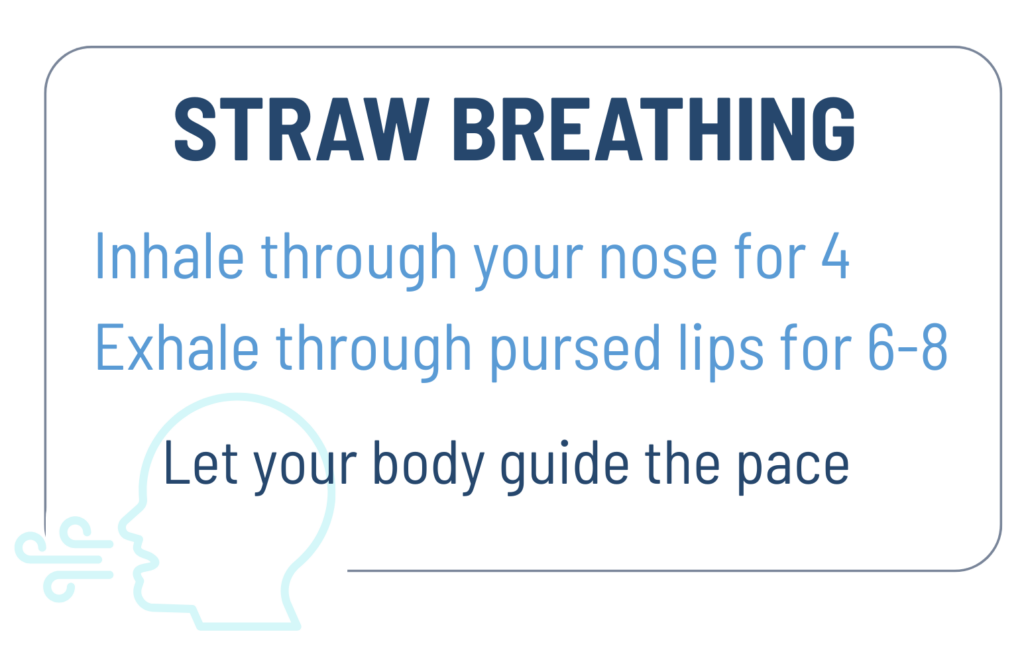
Straw Breathing + Sternum Tapping

  • Breathe in through your nose for a count of 4
  • Breathe out slowly through pursed lips (like a straw) for 6–8
  • Lightly tap your sternum as you breathe

Let your body guide the pace—there is no “perfect” way.

Movement

Shaking, dancing, walking—any form of movement can help regulate your system by releasing stored energy.

Why “Just Calm Down” Doesn’t Work

One of the most important takeaways:

We aren’t built to simply “calm down” on command.

The autonomic nervous system operates automatically—it doesn’t rely on logic or the thinking part of the brain.

That’s why healing isn’t about forcing calm—it’s about building safety.

What Actually Helps the Nervous System Heal

Over time, healing tends to include:

  1. Rebuilding a sense of safety
  2. Receiving support (co-regulation)
  3. Learning how your nervous system works
  4. Practicing simple, consistent regulation tools

This Is a Process—And Progress Is Real

Nervous system healing doesn’t happen overnight.

Often, you won’t notice changes day to day—but when you look back, you may see how far you’ve come.

There are ways to support your body.
There are ways to feel more grounded.

Feeling better is possible.

Watch the full conversation here and explore more resources on post-trauma life at Sandal Blue Foundation.

Understanding Breathwork
Post-Trauma LifeResource Conversations

Understanding Breathwork – Resource Conversation

How Conscious Breathing Supports Nervous System Regulation and Emotional Release

In a world where stress can easily become stored in the body, many people are turning to breathwork as a simple yet powerful way to regulate the nervous system, release emotional tension, and reconnect with a sense of safety.

One expert who speaks to this work is Tricia Sexton of Rooted Journey, who helps people understand how intentional breathing can support healing—especially for those navigating trauma or chronic stress.

What Is Breathwork?

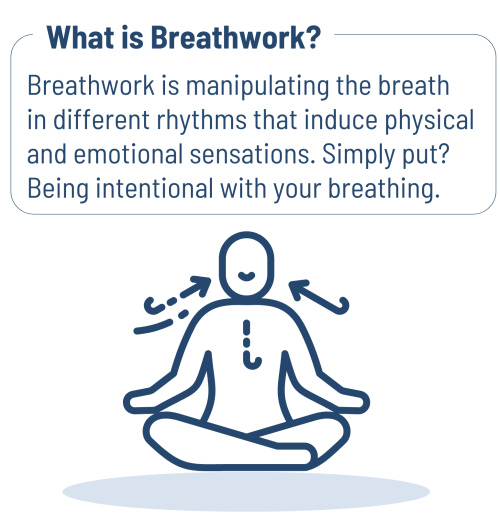
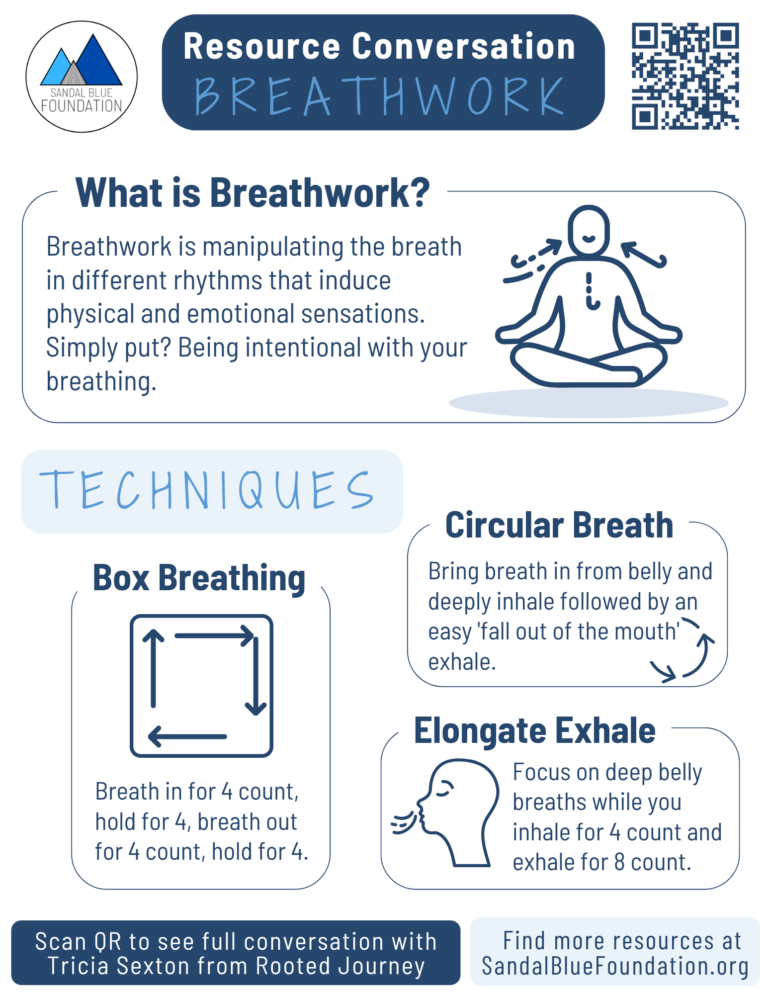
Breathwork refers to a variety of intentional breathing practices designed to influence physical, emotional, and mental states.

In yogic tradition, breathwork is known as pranayama, which focuses on controlled, often gentle breath regulation to support balance in the body and mind.

More modern approaches include styles like:

  • Holotropic breathwork, which involves deeper, more rhythmic breathing patterns that can bring up emotional release and altered states of awareness
  • Wim Hof Method, which helped bring awareness to more intense breath techniques used for energy, resilience, and cold exposure training

Across all styles, the foundation remains the same: using breath intentionally to shift how the body and nervous system are functioning.

What is Breathwork

How Breathwork Supports the Nervous System

For individuals experiencing trauma or prolonged stress, the body can remain stuck in a heightened survival state known as fight or flight.

Breathwork helps bring the body back into rest and digest, a state where:

  • The body feels safer and more grounded
  • Digestion and internal regulation function properly
  • The mind becomes calmer and more present
  • Emotional processing becomes more accessible

In simple terms, breathwork helps remind the body that it is safe.

When that shift happens, stored stress and emotional energy can begin to move rather than stay trapped in the system.

Why Breath Becomes a Healing Tool

Stress is not just mental—it is physiological. When overwhelming experiences are not fully processed, they can remain in the body as tension, anxiety, or emotional reactivity.

Breathwork works because it directly interacts with the autonomic nervous system, helping to:

  • Slow down racing thoughts
  • Release physical tension
  • Increase emotional awareness
  • Create space for healing and regulation

It is not about forcing change, but about gently guiding the body back into balance.

Breathwork Techniques

Simple Breathwork Techniques to Try

One of the most important principles in breathwork is simplicity. You do not need complex methods to begin experiencing benefits. The key is consistency and awareness.

Here are a few accessible techniques:

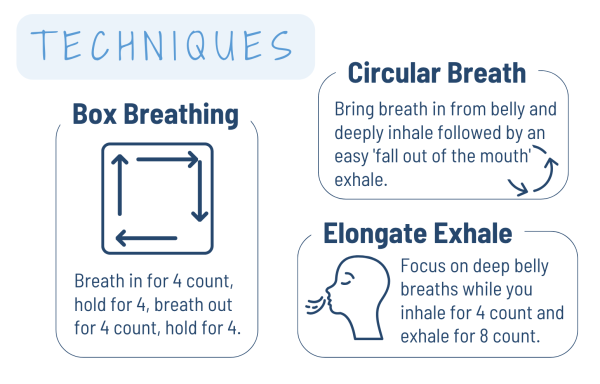
1. Box Breathing (4-4-4-4)

A grounding technique often used to calm anxiety and stabilize the nervous system.

  • Inhale for 4 seconds
  • Hold for 4 seconds
  • Exhale for 4 seconds
  • Hold for 4 seconds
    Repeat for several rounds.

2. Elongated Exhale Breathing

A simple way to shift the body into a calmer state.

  • Inhale for 4 seconds
  • Exhale for 6 seconds
    Focus on allowing the exhale to be slower and longer than the inhale.
    Let the breath drop into the belly (diaphragmatic breathing).

3. Grounding Breath Awareness

This practice combines breath with present-moment awareness.

  • Bring attention to your breath in the background
  • Notice sensations in your body
  • Observe what you feel without judgment
  • Stay anchored in the present moment

This helps build nervous system awareness and emotional presence.

4. Circular Breath

A more active practice often used for emotional release.

  • Inhale through the nose
  • Exhale through the mouth
  • Keep the breath continuous and flowing
  • Let the exhale feel like a soft release

This can be practiced for up to 10 minutes and may help move “stuck” emotional energy through the body.

Keep It Simple and Listen to Your Body

Breathwork is not about doing it perfectly—it is about noticing what your body needs.

Different techniques create different effects, so it is important to:

  • Start slowly
  • Choose one technique that feels supportive
  • Pay attention to how your body responds
  • Adjust as needed

What works for one person may not work for another, and that is okay.

The goal is not intensity—it is regulation, awareness, and connection.

Final Thought

Breath is something we always have access to, yet it is often overlooked as a tool for healing.

Practices like those shared through Rooted Journey remind us that something as simple as conscious breathing can help bring the body back into balance, release stored stress, and support emotional healing from the inside out.

Go Deeper: The Full Resource Conversation

If this resonated with you, we’d invite you to listen to the full resource conversation below.

Tricia shares more about how breathwork supports the nervous system, emotional release, and how to begin in a way that feels simple and doable.

Take it in however you need – audio on, or captions along the way.

Pre-Surgery
Health and Healing

The Day Before Surgery: A Gentle Checklist to Help You Feel Ready

Preparing for surgery and the recovery that follows can feel overwhelming—mentally, emotionally, and physically.
If that’s where you are right now, take a breath. You don’t have to prepare perfectly. 
You just need to make things a little easier for your future self.
Here are some simple things you can do ahead of time to help your surgery day and recovery feel more supported and less stressful.

1. Prepare Your Space for Comfort

Before surgery day, set yourself up to come home to ease, not effort.
  • Wash and set out comfortable clothes you can easily put on
  • Stock up on soft, easy-to-eat foods and drinks
  • Keep snacks and hydration within easy reach
  • If you can, set up a “rest area” with everything you might need nearby
Small preparation here can make a big difference later.

2. Make Recovery Life Easier (not perfect)

You won’t feel like cooking or cleaning—and that’s okay.
  • Stock paper plates, bowls, and utensils to reduce dishes
  • Prep or plan simple meals for your household
  • Have snacks ready for both you and anyone helping care for you
Think: less effort, not more expectations.

3. Plan for Rest + Distraction

Recovery comes with a lot of downtime. A little planning can help that feel less frustrating.
  • Save shows you can binge-watch
  • Pick up a book you’ve been wanting to read
  • Download podcasts or audiobooks
  • Grab coloring pages or simple hands-on activities if that helps you relax
You’re not “just waiting”—you’re healing.

4. Coordinate Your Support System

You are not meant to do this alone.
  • Confirm who will drive you to and from the hospital
  • Let caregivers know what kind of help you might need
  • Talk through both physical and emotional support needs
  • Don’t be afraid to assign specific tasks to specific people
People often want to help—they just need clarity.

5. Look Ahead at Your Calendar

Take a quick look at what’s coming up and release what you don’t need to carry.
  • Cancel or reschedule anything non-essential
  • Identify where you might need help in advance
  • Delegate where you can
This is a season to receive support, not push through.

6. Pack Your Surgery Day Bag

Keep it simple and practical. You don’t need much—just what brings comfort and ease.
Consider including:
  • ID, insurance card, and co-pay info (if needed)
  • Comfortable, loose clothing for after surgery
  • Lip balm, toiletries, and basic comfort items
  • Light snacks or drink (if allowed after surgery)
  • Any required medications
  • Something small for comfort (book, headphones, etc.)

7. Take Care of Your Mind Too

In the days leading up to surgery, give yourself permission to slow down.
  • Go on a gentle walk
  • Spend time with someone you love
  • Watch something comforting
  • Listen to music that settles your nervous system
  • Rest without guilt
Your body isn’t the only thing preparing—your mind is too.

A Final Reminder

If you forget something, it’s okay. If you feel nervous, that’s normal.
You will have medical staff. You will have caregivers. You will not be alone in this.
And even when it feels uncertain—you are still moving through something that is being held with support around you.
One step at a time. One moment at a time.
Good Luck!