The Power of a Communication Specialist
When Everything Feels Overwhelming: The Power of a Communication Specialist
In the middle of a medical crisis, information moves fast… and emotions move even faster.
People care deeply and want updates. Phones are buzzing. Questions are coming in. And for the survivor (and their closest family), even answering a simple “How are things?” can feel like too much.
This is where having a communication specialist can make a meaningful difference.
Not someone to manage the situation — but someone to hold the flow of communication with care, clarity, and consistency.
Why One Point of Contact Matters
When multiple people are sharing updates, even with the best intentions, things can quickly become confusing or miscommunicated.
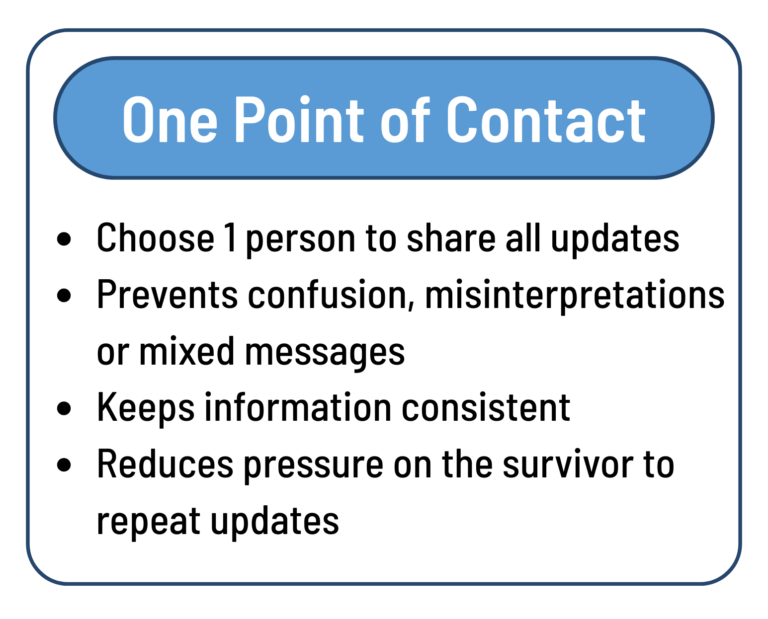
Having one person responsible for updates:
- Keeps information consistent and accurate
- Reduces the risk of details getting unintentionally changed
- Creates a predictable rhythm for sharing
- Protects the survivor from having to repeat their story over and over
It becomes a simple, steady system in the middle of uncertainty.
Often, updates are shared through a group text thread or a central platform — making it easier for people to stay informed without overwhelming the survivor.
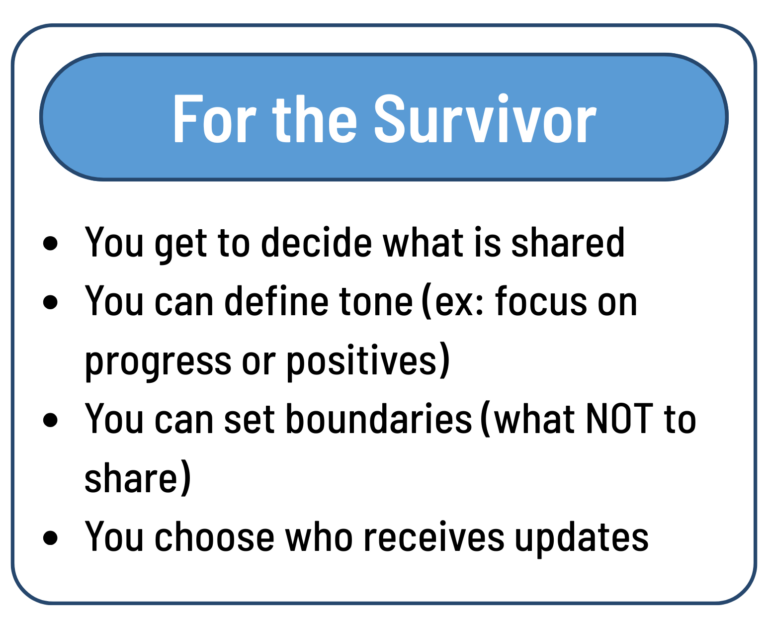
For the Survivor: Setting the Tone
One of the most important (and empowering) things a survivor can do is set expectations for how updates are shared.
In a situation that can feel completely out of control, this is one way to regain a sense of ownership.
You might consider:
- What do you want included in updates?
- What do you want left out?
- What tone feels right for you? (For example: focusing on progress or positives)
- Who should receive updates — and who shouldn’t?
It’s okay to be specific.
It’s okay to change your mind.
And it’s okay to ask for things to be shared in a way that feels aligned with you.
For the Helper: What This Role Really Means
Being the communication specialist is not about having the right words.
It’s about respecting the survivor’s voice and reflecting it back to others.
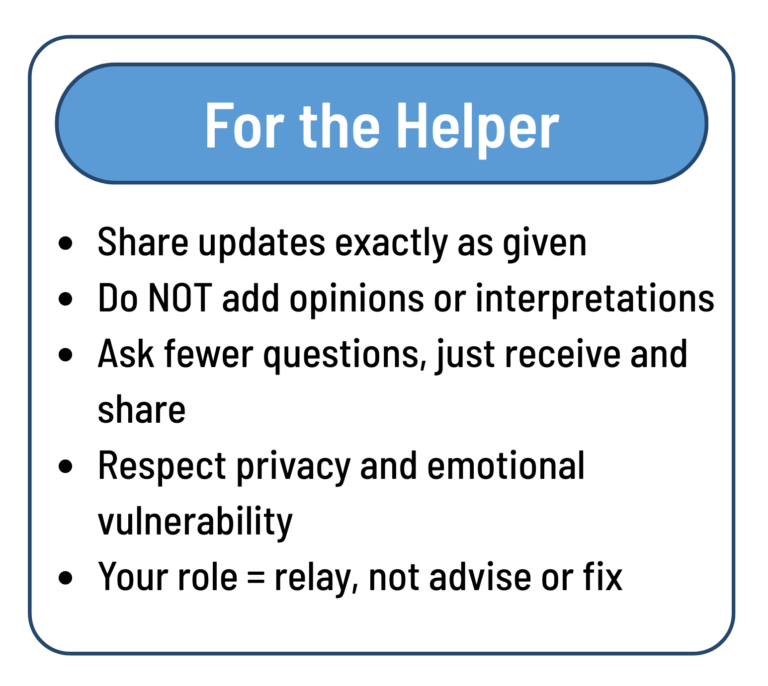
A few guiding principles:
- Share, don’t interpret. Avoid adding opinions, assumptions, or extra meaning.
- Follow their lead. Share what they want shared — nothing more, nothing less.
- Limit questions. Your role isn’t to gather information, but to pass along what’s given.
- Honor the vulnerability. This information is deeply personal. Be mindful of who it’s shared with.
- Let it be simple. Updates don’t need to be perfect. People just want to know what’s going on.
Most importantly:
Your job is not to fix, advise, or manage. Your job is to love them — and communicate for them.
When Should Updates Be Shared?
As soon as information is available.
People who care are often waiting and checking in, hoping for news. Sharing updates in real-time (or as close to it as possible) helps ease that uncertainty.
Some people choose to:
- Share updates as they come
- Transition to daily summaries once things stabilize
- Organize updates by individual if multiple people are involved
There’s no one “right” way — just what works best for the situation.
A Helpful Tool to Consider
One platform that many families find helpful is CaringBridge.
It’s a free site designed specifically for sharing updates during medical journeys. Some features include:
- Time-stamped updates
- The ability to post photos and videos
- A space for others to leave comments and encouragement
- Options to keep the page public or private
A quick note: the platform is donation-based. If you’re hoping to financially support the survivor, double-check that your donation is going directly to them — not just the platform
A Meaningful Idea to Hold Onto
In the middle of hard days, there are often small moments of light — encouraging messages, thoughtful texts, reminders of hope.
One beautiful way to preserve that:
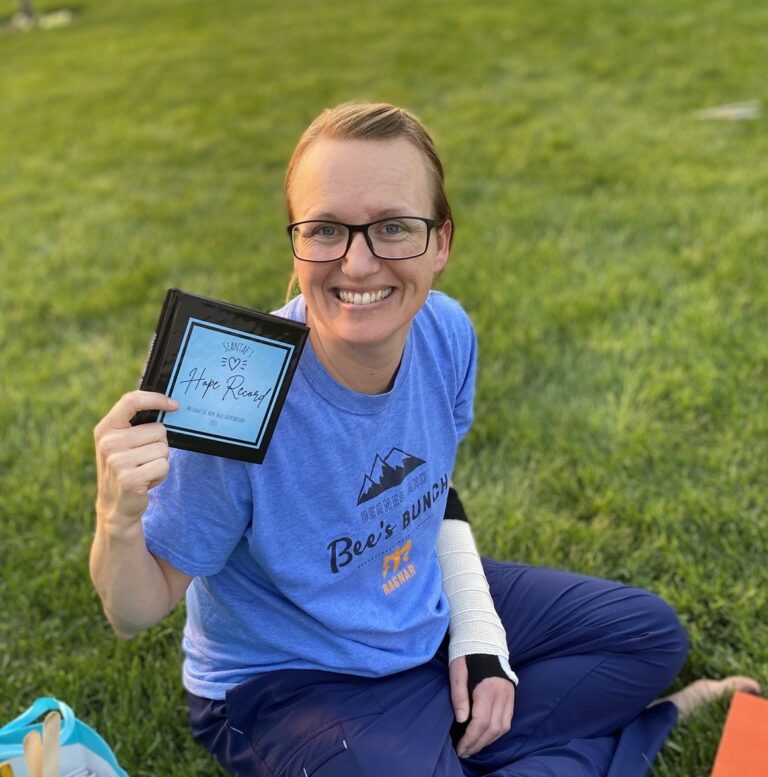
- Have the survivor send you meaningful messages, quotes, or images they receive
- Save and compile them over time
- Turn them into a printed book or keepsake
It becomes something they can return to — a reminder of how supported and loved they were through it all.
Final Thought
Communication might seem like a small piece of the puzzle… but in moments of crisis, it carries so much weight.
When done with intention, it:
- Protects the survivor’s energy
- Keeps loved ones connected
- Creates clarity in the chaos
And most importantly — it reminds everyone involved that even in the hardest moments, no one is walking through it alone.
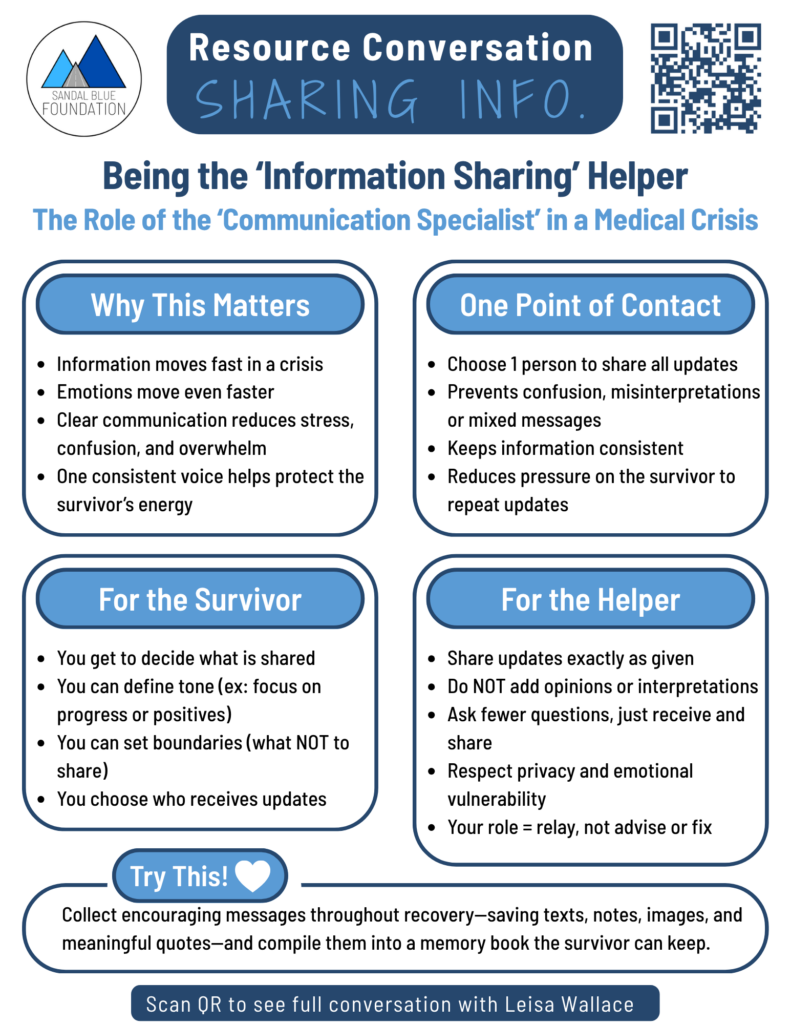
In this conversation, we explore how having a designated communication specialist can help protect a survivor’s energy, bring clarity to loved ones, and create a more thoughtful and consistent way of sharing updates during a medical crisis.