The Zone of Connection
Understanding Your Nervous System After a Motor Vehicle Incident
What if some of the things you experience after a motor vehicle incident aren’t a sign that you’re failing to cope, but a sign that your nervous system is working hard to protect you?
In this Resource Conversation, Sandal Blue Foundation welcomes Leah Davidson of Building Resilience Podcast to explore The Zone of Connection, how our nervous system responds to stress and trauma, and practical ways to help ourselves feel safer, more regulated, and more like ourselves again.
For survivors navigating traumatic brain injury (TBI), physical recovery, emotional changes, or the many adjustments that follow a motor vehicle incident, understanding the nervous system can be an important step toward greater self-compassion and healing.
Understanding Your Nervous System

Leah Davidson is a Nervous System Resilience Coach and Speech Language Pathologist with more than 26 years of experience working with traumatic brain injury. Through her work with survivors, she began noticing that learning and applying new strategies wasn’t always as simple as teaching someone a skill.
A person’s ability to pay attention, access strategies, manage emotions, and navigate change can be influenced by their nervous system. After an injury, the strategies and habits that once worked may no longer be as effective.
This led Leah to explore how nervous system regulation could help people build a stronger foundation for recovery and everyday life.
Our nervous system is how our brain and body communicate. One of its primary jobs is to protect us by continually assessing whether we’re safe or in danger. It responds to what is happening around us, as well as what our past experiences have taught us to expect.
Sometimes, our nervous system responds to a situation as a threat even when we aren’t in immediate physical danger. This can affect our heart rate, digestion, thoughts, emotions, energy, and ability to concentrate.
Understanding these responses can help us recognize what’s happening in our bodies without judging ourselves for it.
The Three Zones: Protection and Connection
Leah describes how our nervous system can move between two zones of protection and a zone of connection.
Hyperarousal: Fight or Flight
‘Team Hyper’ is when our nervous system senses a threat, we may become more alert and activated. Our thoughts might race, our heart may pound, and we may feel anxious, irritated, defensive, or overwhelmed. We might want to fight back, escape, or avoid a situation altogether.
Hypoarousal: Shutdown
‘Team Hypo’ is when our system has been under stress for too long, we may experience a drop in energy. We might feel disconnected, invisible, hopeless, exhausted, or unable to take action.
Neither response means something is wrong with you. These are biological survival responses. However, when our system is focused on protection, we may have less access to skills like critical thinking, compassion, learning, and thoughtful decision-making.
The Zone of Connection
This is where we begin to feel more like ourselves. We can connect with other people, accept support, learn new strategies, respond with intention, and approach challenges with greater openness.
As Leah explains, this is where healing and meaningful connection can happen.
The goal isn’t to stay perfectly regulated all the time. It’s to recognize where we are and build practical ways to return to a state where we feel more connected to ourselves and others.
Brain Injury, Emotional Changes, and Self-Compassion
For people living with a traumatic brain injury, emotional and behavioral changes can be especially confusing. Brain injuries can cause physical changes in the brain that affect inhibition, self-awareness, fatigue, and the ability to manage frustration.
Leah explains that nervous system dysregulation can amplify some of these experiences. When you’re already dealing with brain fog, fatigue, or reduced tolerance for stress, your nervous system’s response can turn up the intensity even further.
She describes it like a volume control.
You may not be able to reverse every effect of an injury, but learning to recognize and regulate your nervous system can help turn down the volume on some of the experiences that feel difficult to manage.
This understanding can also change how we view ourselves. Instead of asking, “What’s wrong with me?” we can begin asking, “What’s happening in my nervous system, and what might help right now?”
That shift creates room for self-compassion rather than self-criticism.
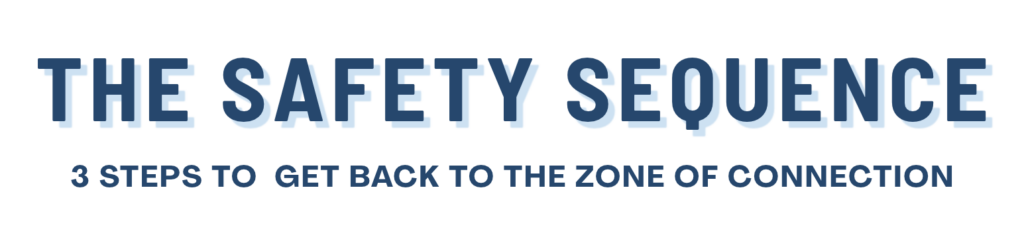
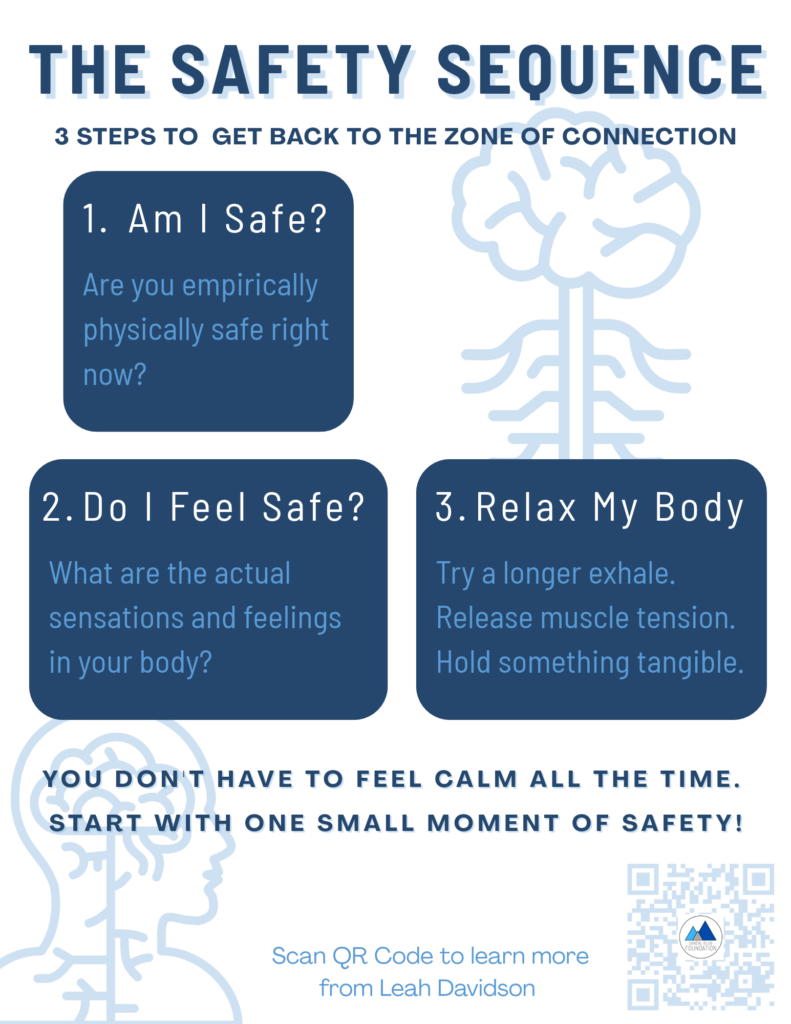
The Safety Sequence: Three Steps to Help You Reconnect
One of the practical tools Leah shares is the Safety Sequence, a simple way to check in with yourself and help your body move toward a more regulated state.
You can practice it during a stressful moment or throughout your everyday routine.

1. Am I safe?
Start by asking whether you are physically safe in this moment. Is there an actual, immediate danger that requires your attention?
Your nervous system needs to know when a real threat is present. If you are in danger, prioritize getting to safety. But most of the time there is nothing threatening right now.
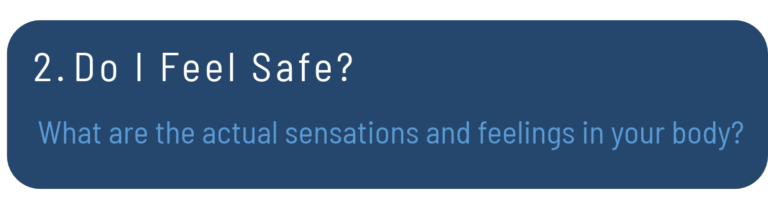
2. Do I feel safe?
Physical safety and the feeling of safety aren’t always the same thing. Even when you are objectively safe, your body may still be responding as though something is wrong.
Notice what is happening inside you. Is your heart racing? Are your muscles tense? Do you feel anxious, angry, or overwhelmed?
You don’t have to convince yourself that everything is fine. Simply noticing what you’re experiencing can help you better understand what you need.
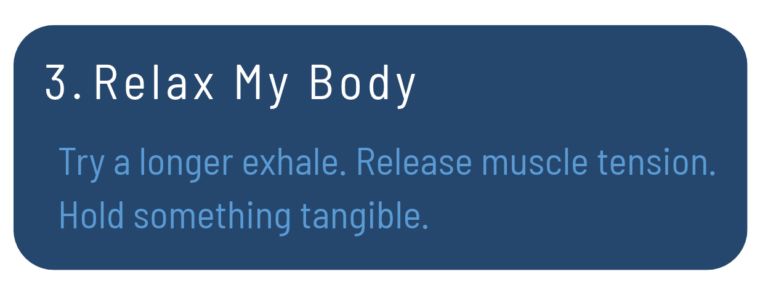
3. Find a way to relax your body.
Choose a small action that helps your body experience a little more ease. You might try lengthening your exhale, gently releasing tension in your muscles, letting your arms and shoulders relax, or holding and noticing a tangible object.
The goal isn’t to force yourself to feel calm. It’s to give your body an opportunity to experience relaxation and recognize that, in this moment, it may be safe enough to soften its protective response.
You may need to repeat these steps many times. (Even hundreds of times a day!) That’s okay.
Each small moment of safety can help you build a stronger foundation for navigating future stress. With practice, you may find it easier to recognize when your nervous system is activated and choose how you want to respond.
And when your system is more regulated, you may have greater access to your thinking skills, making it easier to approach a situation deliberately instead of reacting automatically.
Small Practices Can Make a Meaningful Difference
Nervous system regulation doesn’t have to be complicated or require a special setting. These practices can be used throughout the day, often without anyone else knowing.
Over time, learning about your nervous system can help you recognize your patterns, understand your needs, and respond to yourself with greater compassion.
For survivors and caregivers, this understanding can be particularly valuable. Recovery and caregiving both involve uncertainty, change, and stress. Having practical tools to support your own well-being can help you navigate those experiences with greater awareness.
Leah also emphasizes the importance of self-compassion. Many people carry a strong inner critic and become frustrated with themselves when recovery takes longer than expected or when they struggle with changes they didn’t choose.
Understanding your nervous system offers another perspective: your responses often have a reason, even when they aren’t the responses you want to have.
Learning to work with your nervous system can change your relationship with yourself and with the people around you.
Explore Leah’s Nervous System Resources
Leah is committed to making nervous system education accessible through coaching, training, creative tools, and practical resources.
Her offerings include:
Building Resilience Podcast: Conversations and insights about resilience, well-being, and personal growth.
Resilience Journal: A guided journal with a 90-day framework to help you explore and apply nervous system concepts in everyday life.
Doodle Your Nervous System: A creative, 12-week journaling experience that combines drawing and guided learning to explore how your nervous system works.
My Safe Space Affirmation and Journal Prompt Cards: Tools to support reflection and explore feelings of safety.
Worry Time Pad and Program: Resources to help you work with recurring worries and anxious thought loops.
Midlife Nervous System Rewire: A membership offering evidence-based and creative tools for nervous system support.
Advanced Training in Nervous System Resilience: Training for coaches, helping professionals, and others who want to deepen their understanding of the nervous system.