Financial Resources for Utah Families After a Child’s Traumatic Brain Injury

Parent-to-parent.
Parent to Parent is a series of honest encouragement from one parent who’s been there to another. These are the reminders, lessons, and practical tips we wish someone had shared with us while navigating our child’s recovery after our motor vehicle incident.
When your child has a serious traumatic brain injury, there is so much to think about.
There are appointments. Medications. Therapy. Equipment. School. Transportation. Follow-up surgeries. Figuring out how much care your child will need at home.
And somewhere in the middle of all of that, the financial questions start coming.
How are we going to pay for all of this?
Maybe you’re worried about the cost of ongoing physical, occupational, or speech therapy. Maybe one parent has had to miss work or reduce their hours to care for your child. Maybe you’re facing equipment costs, transportation expenses, medical bills, or a long recovery that you simply weren’t prepared for.
If that’s where you are right now, I want you to know something: you don’t have to figure all of this out on your own.
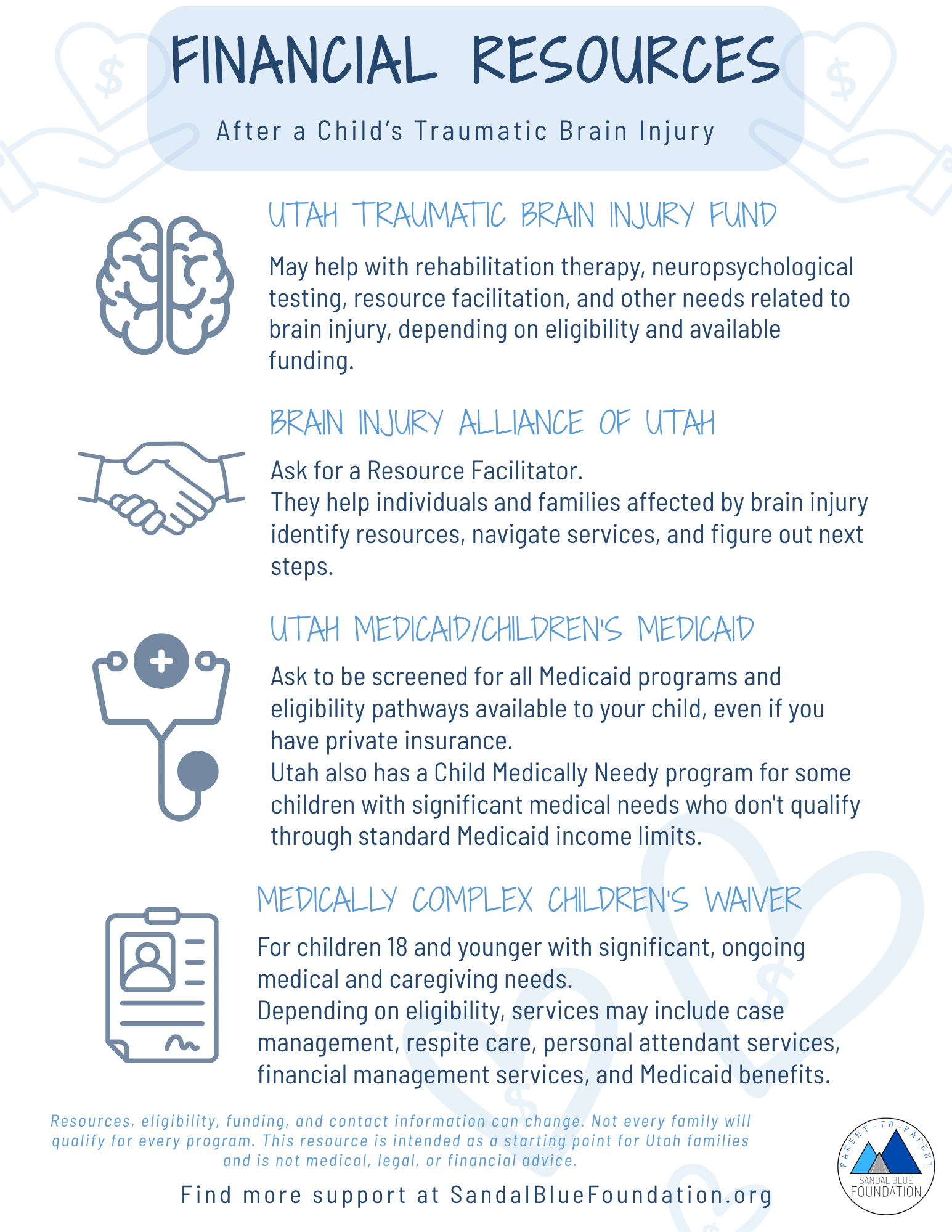
There are resources in Utah that may be able to help families caring for a child after a traumatic brain injury. Not every family will qualify for every program, but these are places worth asking about. And you don’t need to know exactly what you qualify for before you call.
Start here.

1. Utah Brain Injury and Spinal Cord Injury Fund
This is one of the first places I would contact.
Utah has a Brain Injury and Spinal Cord Injury Fund that can provide support to people with brain and spinal cord injuries. Depending on eligibility and available funding, support can include rehabilitation therapy, neuropsychological testing, and resource facilitation.
The resource facilitation piece can be especially valuable. You don’t necessarily have to walk in knowing exactly what you need. The goal is to help connect individuals and families with resources and services that support recovery and life after brain injury.
The fund is a payer of last resort, meaning other available funding sources are considered first. But that does not mean you shouldn’t call.
Ask about what your child may qualify for and what documentation you will need.
Ask about:
Physical therapy
Occupational therapy
Speech therapy
Neuropsychological testing
Equipment and other needs related to the brain injury
Resource facilitation and other available supports
Learn more about Utah’s Traumatic Brain Injury resources

2. Brain Injury Alliance of Utah
The Brain Injury Alliance of Utah is another place I would put on your list.
They have resource facilitators who work with individuals and families affected by brain injury. Their goal is to help people with brain injuries find the resources and support they need to move forward.
You don’t need to have the perfect list of questions. You can simply say, “My child has a traumatic brain injury, and we’re trying to figure out what resources are available to our family.”
Tell them what your child needs now and what you’re worried about. They can help you start figuring out what comes next.
Brain Injury Alliance of Utah
Phone: 801-709-1420
Email: jodi@biau.org
Visit Brain Injury Alliance of Utah

3. Utah Medicaid and Children’s Medicaid
Don’t automatically assume your family won’t qualify.
When your child has a significant medical injury, it is worth asking about every Medicaid pathway that may apply, even if your child already has private health insurance.
Utah has different Medicaid programs and eligibility pathways for children. There is also a Child Medically Needy program for some children who don’t qualify through the standard Medicaid income limits but have significant medical needs.
For children who qualify for Medicaid, medically necessary services may also be available through the EPSDT benefit.
Your family’s insurance and financial situation will determine what applies, so this is a good place to ask the hospital’s financial counselor or social worker for help.
Ask:
“Can you screen my child for all Utah Medicaid programs and medically necessary services available to children under 21?”
Learn more about Utah Medicaid
4. Medically Complex Children’s Waiver
If your child’s injuries have resulted in significant, ongoing medical and caregiving needs, ask about Utah’s Medically Complex Children’s Waiver (MCCW).
This program is designed to support children with disabilities and complex medical conditions and can provide access to Medicaid services and supports for caregivers.
Depending on eligibility, services can include RN case management, skilled nursing respite care, routine respite care, personal attendant services, financial management services, and traditional Medicaid benefits.
There are specific medical eligibility requirements. The program looks at the child’s medical complexity, specialty care, functional limitations, and ongoing medical needs. Not every child with a TBI will qualify, but if your child has significant ongoing needs, it is worth asking to be screened.
Utah currently accepts applications on an ongoing basis, and qualifying applicants may be placed on a waitlist when funded spots aren’t available.
Medically Complex Children’s Waiver
Phone: 801-538-6155, option 5
Toll-free: 800-662-9651, option 5
Email: mccw@utah.gov
Learn more about the Medically Complex Children’s Waiver
Before Your Child Leaves the Hospital
If your child is still in the hospital, ask to speak with the social worker, case manager, and financial counselor before discharge.
You can say:
“My child has a severe traumatic brain injury and will need ongoing care and rehabilitation after discharge. We need help identifying every financial resource and program we may qualify for, including Medicaid, waivers, rehabilitation funding, equipment assistance, and hospital financial assistance.”
You don’t have to know the names of the programs or understand how all of them work. You don’t have to know exactly what questions to ask. Just tell them what your child needs and what you’re worried about.
If your child has already come home, it’s not too late. Start with the Utah TBI resources and the Brain Injury Alliance of Utah and ask them to help you identify your next steps.
And Please Remember This
There is so much pressure on parents to keep everything together after a child’s injury. You’re expected to understand the medical terminology, remember every appointment, advocate at the hospital, help your child recover, figure out school, and somehow manage everything happening at home, too. Adding the financial side of all of that can feel overwhelming.
If you’re feeling overwhelmed, that doesn’t mean you’re doing something wrong. It means you’re navigating something you never expected to face.
Asking about financial assistance isn’t taking something away from another family. Using a resource that exists for families like yours isn’t failing. And asking for help does not mean you’re not doing a good job taking care of your child. It means you’re taking care of your child.
You don’t have to figure out the entire road ahead today. Start with one phone call, one question, or one resource. Then take the next step when you’re ready.
You and your child deserve support along the way.
A Note About These Resources
Programs, eligibility requirements, funding, waitlists, and contact information can change. Not every family will qualify for every resource listed here. This information is intended to help Utah families know what questions to ask and where to begin. It is not medical, legal, or financial advice.
If you know another Utah family navigating life after a child’s brain injury, share this resource with them. Sometimes knowing where to start is the biggest help we can give.