
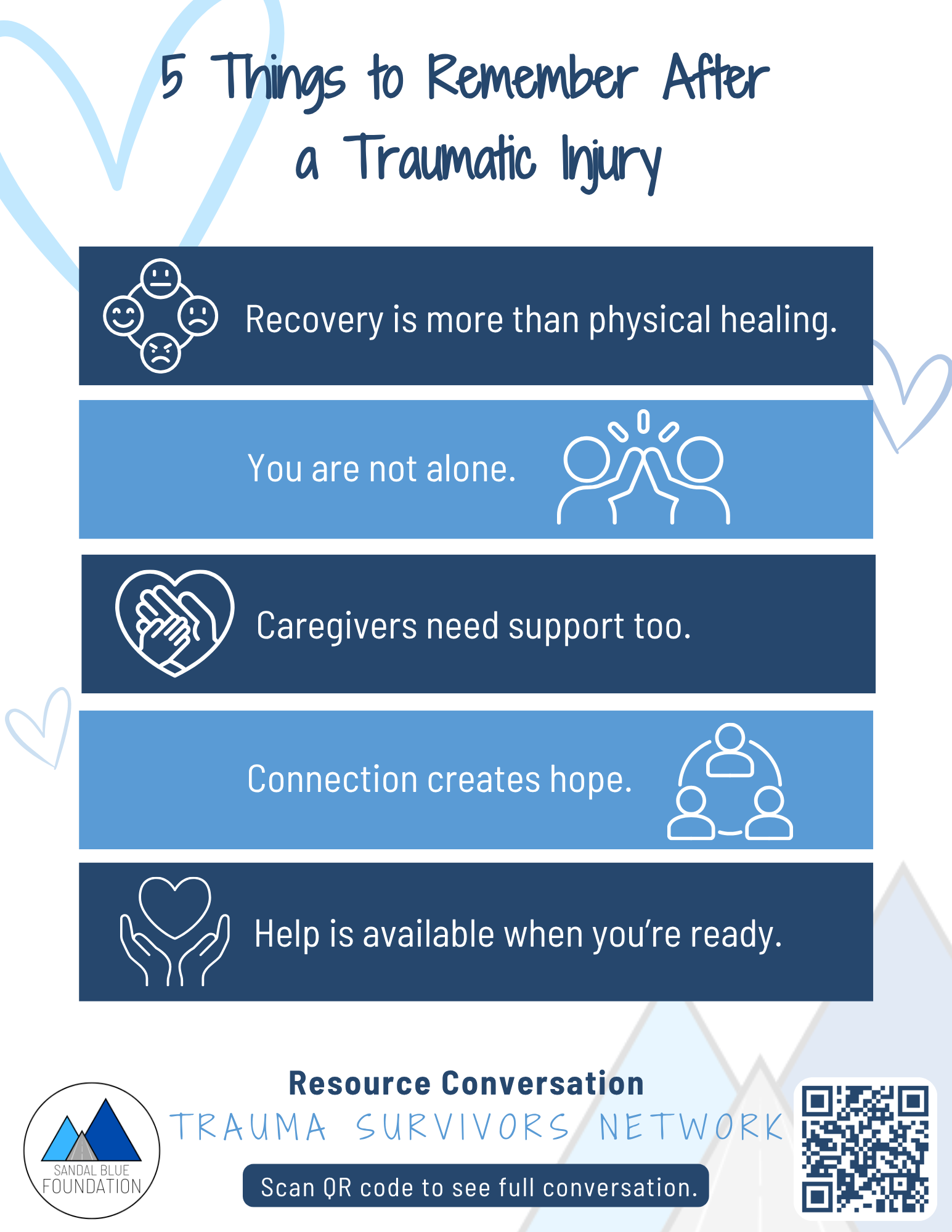
Finding Support After Traumatic Injury
You Don’t Have to Recover Alone
One of the biggest misconceptions about traumatic injury is that once someone leaves the hospital, they are “back to normal.”
For many survivors and their loved ones, discharge is not the end of the journey—it’s the beginning.
The physical healing process often comes with appointments, rehabilitation plans, and follow-up care. But the emotional and mental recovery that follows an injury can be much harder to navigate. Survivors may feel isolated, overwhelmed, anxious, frustrated, or unsure how to adapt to a life that suddenly looks different than it did before.
Family members and caregivers often face their own challenges as they support someone they love while processing their own trauma and stress.
The good news is that no one has to walk that journey alone.
The Importance of Connection After Trauma
The American Trauma Society (ATS) works to improve trauma care at every level—from first responders and healthcare professionals to survivors and families. One of the ways they do this is through the Trauma Survivors Network (TSN), a program designed to provide support, community, education, and connection for people impacted by serious physical injuries.
Traumatic injuries can leave people feeling like no one truly understands what they are experiencing. While friends and family may want to help, they may not know what to say or how to provide support.
Connecting with others who have experienced similar challenges can make a significant difference.
Sometimes the most powerful thing a survivor can hear is:
“I’ve been where you are, and there is life after this.”
Seeing someone who has adapted, rebuilt, and found a new path forward can offer hope during a difficult season.

Adapting to a New Reality
Recovery often involves more than healing physically. It may require adapting to changes in mobility, routines, relationships, work, hobbies, or expectations.
Many survivors describe this process as learning how to navigate a “new normal.”
That adaptation can feel overwhelming when you’re trying to figure it out on your own. Connecting with other survivors and caregivers allows people to learn from those who have already faced similar challenges and discovered ways to move forward.
The goal is not to return to who you were before the injury.
The goal is to learn how to live well within your current reality.
The Power of Peer Support
One of the foundations of trauma recovery support is peer connection.
Many trauma centers throughout the Trauma Survivors Network offer peer visitation programs where trained volunteers—often survivors themselves or caregivers who have walked a similar path—visit patients during their hospital stay.
These visits provide more than information.
They provide hope.
When someone sees a survivor who has faced a similar injury and is now living a meaningful life, it can create a powerful mindset shift. It reminds them that recovery is possible and that their story is still being written.
Support Groups for Survivors and Families
Support groups offer another opportunity to connect with people who understand.
The Trauma Survivors Network hosts several virtual support groups each month and also maintains a directory of local support groups throughout its network. Groups are available for a variety of populations, including:
- Adult survivors
- Caregivers and family members
- Teens and young adults
- Pediatric injury families
Every support group is a little different, but they all share a common purpose: creating a safe space where people can listen, share, ask questions, and learn from one another.
Participation is flexible. Some people feel ready to share their experiences. Others may prefer to simply listen and learn.
Both are welcome.
The important thing is knowing that support is available when you’re ready.
Finding Resources in Your Community
The Trauma Survivors Network includes more than 300 trauma centers across the United States, Canada, and Australia and provides resources to individuals seeking support from anywhere in the world.
One of the most valuable features available through the network is the ability to search for support close to home.
Visitors can use the TSN website’s map or search function to find participating trauma centers, support groups, educational programs, and local resources available in their area.
Joining a local TSN center can help survivors and families stay informed about support opportunities, educational events, and recovery resources available within their own community.
Resources Beyond Support Groups
In addition to support groups and peer mentoring, the Trauma Survivors Network offers a variety of educational resources designed to help survivors and caregivers navigate recovery.
Resources include:
- Survivor stories and recovery journeys
- Educational guides and resource directories
- The TSN Notebook, a collection of tools and information for recovery
- Community-led resources developed by survivors for survivors
The network also maintains active social media communities that provide ongoing encouragement, education, and opportunities for engagement.
Programs include:
- Toolkit Tuesdays, featuring questions and solutions shared by the community
- Family Fridays, focused on caregiver support and resources
- Monthly Injury Insights, where survivors answer anonymously submitted questions about recovery
These initiatives help create ongoing opportunities for connection and learning long after someone leaves the hospital.
Recognizing Trauma Survivors
Each May, communities across the country observe National Trauma Awareness Month.
During this month, the Trauma Survivors Network also celebrates National Trauma Survivors Day on the third Wednesday of May.
Events held throughout the country honor survivors, caregivers, first responders, healthcare teams, therapists, home health professionals, and everyone involved in the recovery journey.
These celebrations help raise awareness about the realities of life after injury while recognizing the resilience of those who continue moving forward.

If You’re Struggling, You’re Not Alone
Sometimes people don’t immediately recognize that they need support.
Instead, they may notice they are more emotional than usual. More anxious. More withdrawn. More frustrated. Less interested in things they once enjoyed.
These changes can be signs that the emotional impact of an injury is still unfolding.
Recovery is not only physical.
It’s emotional, mental, social, and relational as well.
Whether you’re a survivor, caregiver, family member, or friend, support is available.
You don’t need to have all the answers before reaching out.
You don’t even need to share your story if you’re not ready.
You can simply listen, explore resources, and connect when the time feels right.
Because no one should have to navigate recovery alone.
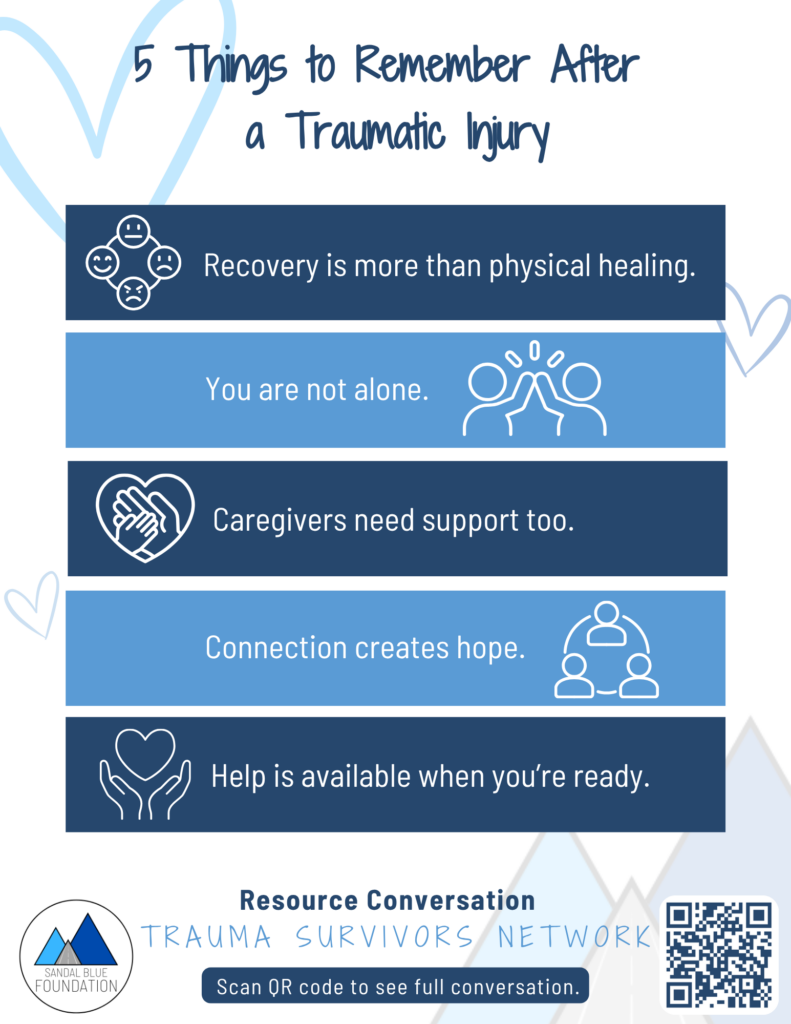
Watch the Full Resource Conversation
Want to learn more about the resources, support programs, and survivor connections available through the Trauma Survivors Network?
Watch our full conversation with Abby Beerman, National Trauma Survivors Network Coordinator, as we discuss life after traumatic injury, the importance of peer support, resources for survivors and caregivers, and how to find help in your community.
Whether you’re a survivor, caregiver, family member, or healthcare professional, this conversation offers valuable insight into the recovery journey and the reminder that no one has to navigate it alone.
Learn More
To explore resources, find support groups, locate a Trauma Survivors Network center near you, or learn more about available programs, visit:
www.TraumaSurvivorsNetwork.org
The website offers a searchable directory of trauma centers, educational resources, survivor tools, and opportunities to connect with others who understand the journey of recovery after injury.