Supporting Your Nervous System After Trauma – Resource Conversation
Supporting Your Nervous System After Trauma
A Resource Conversation with Sarah Stasica from Medical Trauma Support
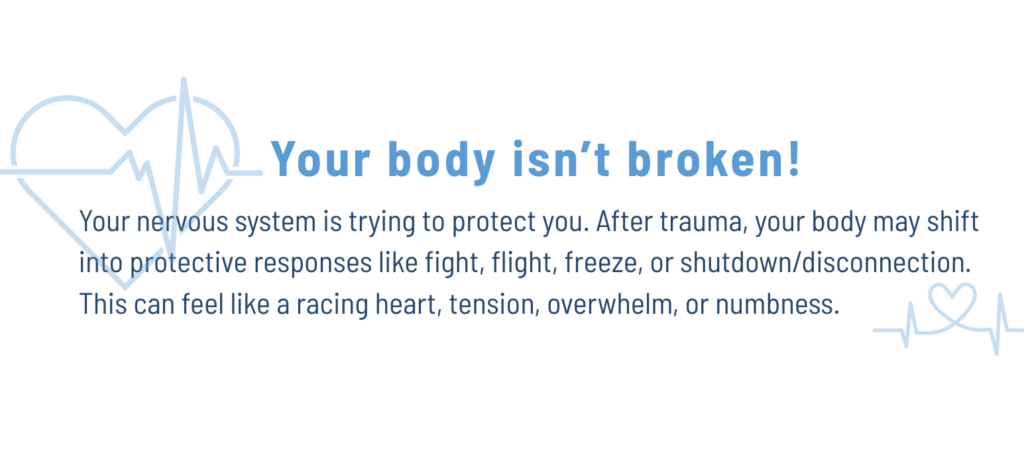
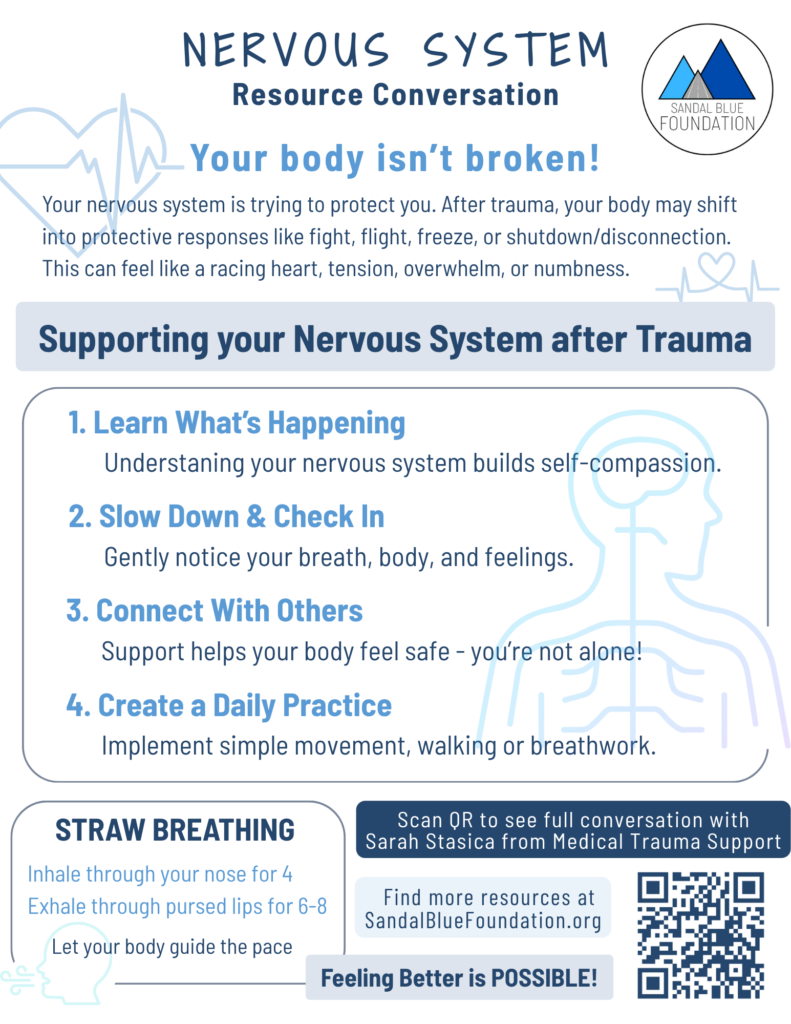
After trauma, it’s common to feel like your body is working against you.
A racing heart. Tight muscles. A sense of panic—or, on the other end, feeling shut down, disconnected, or numb.
These responses can feel confusing, especially when there isn’t immediate danger. But what if your body isn’t broken… just trying to protect you?
In this resource conversation, we explored how the nervous system works, why these responses happen, and most importantly—what you can gently do over time to support your healing.
Understanding the Nervous System (in a simple way)
The part of the nervous system we focused on is the autonomic nervous system—the system that runs automatically, without you needing to think about it.
It has two main branches:
- Sympathetic (the “gas”)
This is your mobilization system—fight, flight, or action. - Parasympathetic (the “brake”)
Often called “rest and digest,” this is where your body can slow down, recover, and heal.
A key player here is the vagus nerve, which makes up a large part of the parasympathetic system. When we stimulate the vagus nerve, we help the body move toward a state where healing is possible.
Your Body Is Always Scanning for Safety
Your nervous system has one main job: keep you safe.
It’s constantly scanning for signs of danger and safety—a process called neuroception.
This happens in a few ways:
- Inside your body (interoception):
Is your heart racing? Are your muscles tight? Are you hungry or exhausted? - Your environment:
Does this place feel familiar? Uncertain? Safe? - The people around you:
Do they feel safe, predictable, and supportive?
When your nervous system senses danger, it can automatically shift into protective responses like:
- Fight
- Flight
- Freeze
- Collapse
- Fawn
These are not choices—they are automatic responses designed to protect you.
What Safety Actually Feels Like
Safety isn’t just something you know—it’s something your body feels.
This “felt sense of safety” is often sensory:
- A familiar smell
- A calm voice
- A supportive presence
- A space that feels predictable
After trauma, your system may become more sensitive to danger cues. But the hopeful truth is this:
We can also help the nervous system learn to recognize safety again.
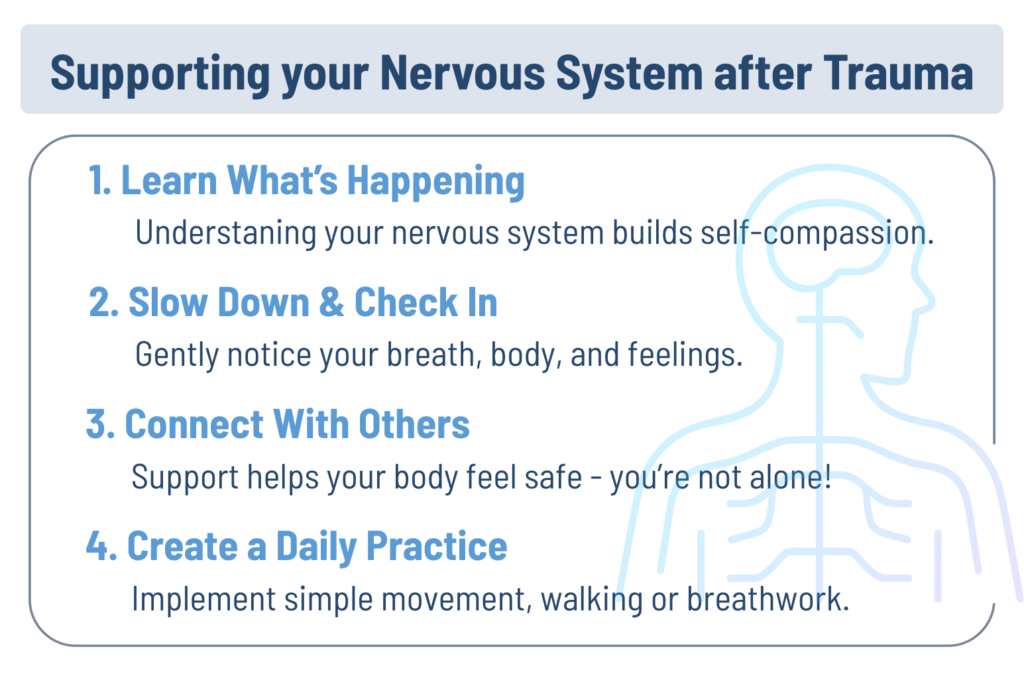
Four Small Daily Practices to Support Your Nervous System
There are many ways to support your nervous system, but we’re focusing on four simple, manageable practices you can build into everyday life.
1. Learn the Basics of Your Nervous System
Understanding what’s happening in your body can be incredibly empowering.
When you recognize that your responses are protective—not broken—you can begin to meet yourself with more compassion instead of frustration.
2. Slow Down and Check In With Yourself
Slowing down can feel challenging—especially after trauma.
In fact, many people need support (like a therapist or trusted person) when they first begin this process.
But gently checking in might look like:
- Noticing your breath
- Asking, “What am I feeling right now?”
- Observing sensations without trying to change them
This is similar to mindfulness—being present with yourself, even in small moments.
3. Seek Support and Connection
Healing is not meant to happen in isolation.
Connection with others creates co-regulation, where your nervous system can begin to feel safe through being with safe people.
Support might look like:
- A therapist
- A support group
- A trusted friend or community
This can help reduce isolation and shame—and remind you that:
there is nothing “wrong” with you, and you are not alone in what you’re feeling.
4. Create a Simple Daily Practice
Consistency matters more than complexity.
A daily practice helps your nervous system regulate over time.
This could include:
- Walking (even a short daily walk)
- Gentle movement like stretching, dancing, or shaking
- Breathwork
- Time outside
Movement, in particular, helps release excess energy your body has mobilized during stress.
Simple Practices You Can Try
Here are a few gentle ways to begin supporting your system:
Orienting
Slowly look around your environment.
Let your eyes move to the horizon, then gently scan side to side, noticing where you are.
This helps your nervous system recognize: I am here. I am safe right now.
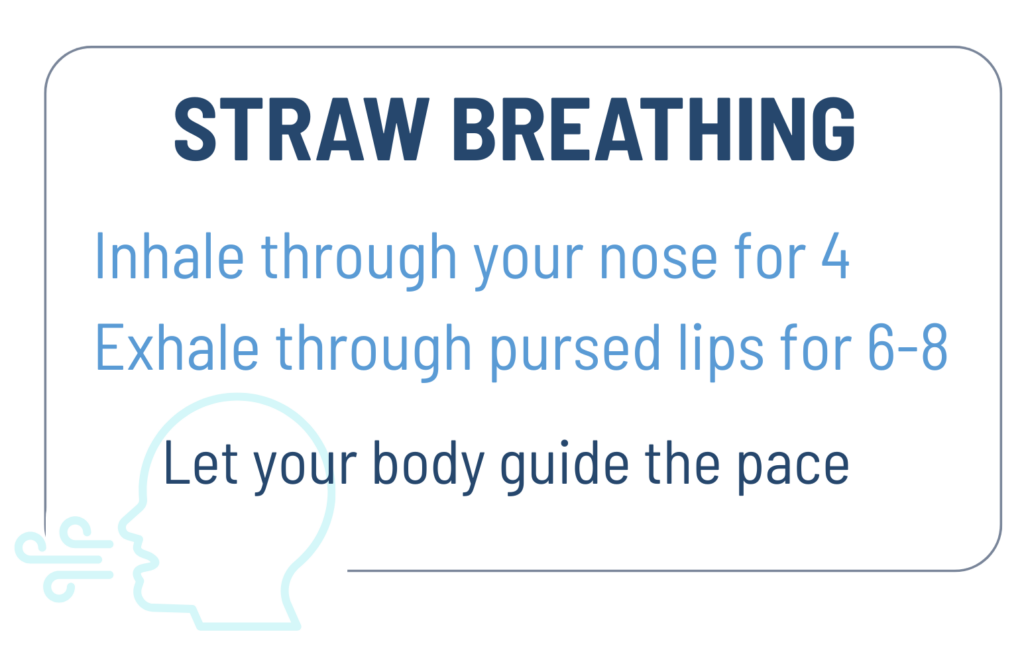
Straw Breathing + Sternum Tapping
- Breathe in through your nose for a count of 4
- Breathe out slowly through pursed lips (like a straw) for 6–8
- Lightly tap your sternum as you breathe
Let your body guide the pace—there is no “perfect” way.
Movement
Shaking, dancing, walking—any form of movement can help regulate your system by releasing stored energy.
Why “Just Calm Down” Doesn’t Work
One of the most important takeaways:
We aren’t built to simply “calm down” on command.
The autonomic nervous system operates automatically—it doesn’t rely on logic or the thinking part of the brain.
That’s why healing isn’t about forcing calm—it’s about building safety.
What Actually Helps the Nervous System Heal
Over time, healing tends to include:
- Rebuilding a sense of safety
- Receiving support (co-regulation)
- Learning how your nervous system works
- Practicing simple, consistent regulation tools
This Is a Process—And Progress Is Real
Nervous system healing doesn’t happen overnight.
Often, you won’t notice changes day to day—but when you look back, you may see how far you’ve come.
There are ways to support your body.
There are ways to feel more grounded.
Feeling better is possible.
Watch the full conversation here and explore more resources on post-trauma life at Sandal Blue Foundation.