
Navigating TBI Recovery and Patient Advocacy
When a loved one experiences a traumatic brain injury (TBI), families are suddenly expected to understand a world of medical terminology, treatment decisions, and healthcare systems they may have never encountered before.
In our latest Resource Conversation, we sat down with Kathleen Skeins, BCPA, founder of Advocates For Hope, to talk about caregiver education, patient advocacy, and how families can feel more confident navigating TBI recovery.
Kathleen became a patient advocate after her husband sustained a severe TBI. Today, she works with caregivers to help them understand what is happening, know what questions to ask, and navigate the healthcare system with greater confidence.
You Are Allowed to Ask Questions
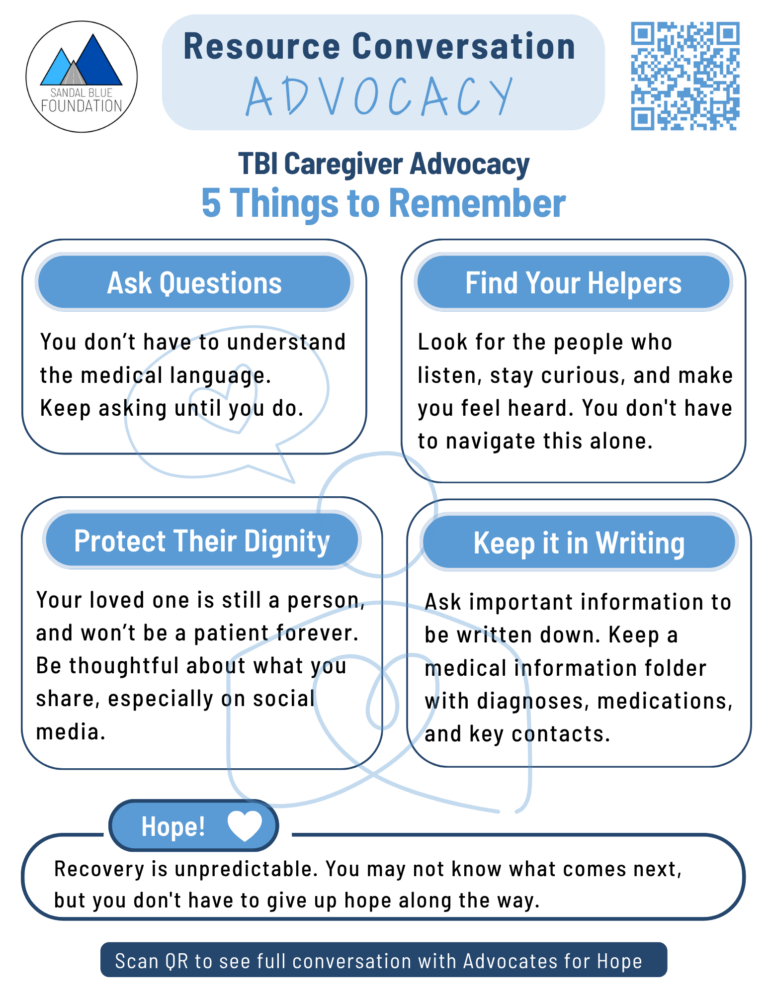
One of the biggest takeaways from our conversation was simple: it’s okay to keep asking questions.
When you’re dealing with a TBI, it can sometimes feel like everyone is speaking a different language. Medical terminology, diagnoses, medications, and treatment plans can quickly become overwhelming. Kathleen explained that a patient advocate can help bridge that gap between the medical team and the family.
Families can sometimes accept everything they’re told because they assume the professionals know best or because they don’t know what questions they should be asking. But being curious is an important part of being an advocate.
You don’t have to know the medical terminology. You can ask, “What does that mean?” or “Can you explain that another way?” And if you still don’t understand, ask again.
Kathleen shared that some of the nurses and doctors who cared for her husband actually taught her this. They showed her that it was okay to ask questions and to make sure the doctor answered them.
Another practical tip she shared is to ask, “Who is in charge today?” Hospital teams change, and knowing who is responsible for care that day gives you a clear person to go to when you need an answer.
It can also be helpful to ask that important information be put in writing. Something as simple as, “Can we make sure that’s written down so I can remember it in a few days?” can make a big difference when you’re exhausted and trying to process an overwhelming amount of information.
Find Your Helpers
When you’re in the middle of a medical crisis, finding the people who will truly help you can be difficult.
Kathleen said trust is one of the biggest factors. Pay attention to how people respond to you. Do they listen? Do they stay curious with you? Do they take your questions seriously?
You may not connect with everyone you encounter, and that’s okay. Find the people you connect with and enlist your helpers.
That might be a nurse who takes extra time to explain something, a social worker who helps you understand the next step, a doctor who welcomes your questions, or another professional who makes you feel heard. When you find those people, don’t be afraid to ask them for help advocating for your loved one.
Preparing for Life at Home
Going home after a TBI can feel like a huge milestone—and also a little scary. Before leaving the hospital, Kathleen recommends asking what you should be watching for and what changes should prompt you to call someone.
Know who to contact if something changes, who to call in a hurry, and what information they will need if your loved one requires additional care.
It can also be helpful to create a medical information folder that includes important information such as the initial injury, diagnoses, medications, allergies, and other medical history. Keep a paper copy somewhere accessible. Because TBI can be a hidden disability, having that information available can help EMS and emergency department professionals understand your loved one’s needs.
You can keep a digital backup on your phone, an app, or a thumb drive, but Kathleen emphasized the importance of having information available on paper for EMS and emergency departments.
She also recommends keeping a caregiver go-bag ready and creating one designated place at home for the educational binders, paperwork, and other information you receive throughout recovery. You may not need something right away, but knowing where everything is when you do need it can save a lot of stress.
Another helpful tool can be recording discharge conversations, when permitted, so you can go back and listen to the information later. When you’re overwhelmed, you shouldn’t have to rely on your memory alone to retain every instruction you’re given.
Keep Hope in the Picture
TBI recovery can be unpredictable. You may not be where you hoped you would be, and the road may look very different than you imagined.
Kathleen’s reminder was not to ignore the hard things—but also not to lose sight of hope.
Nobody can predict exactly what is going to happen.
Get to know your loved one again. If they were a strong personality before the injury, that part of them may still be there. If they had challenges before their injury, those challenges may still exist, too. Recovery doesn’t necessarily mean becoming an entirely different person. It can mean learning how to understand and support the person you already love in a new way.
Most importantly, you don’t have to navigate it all alone.
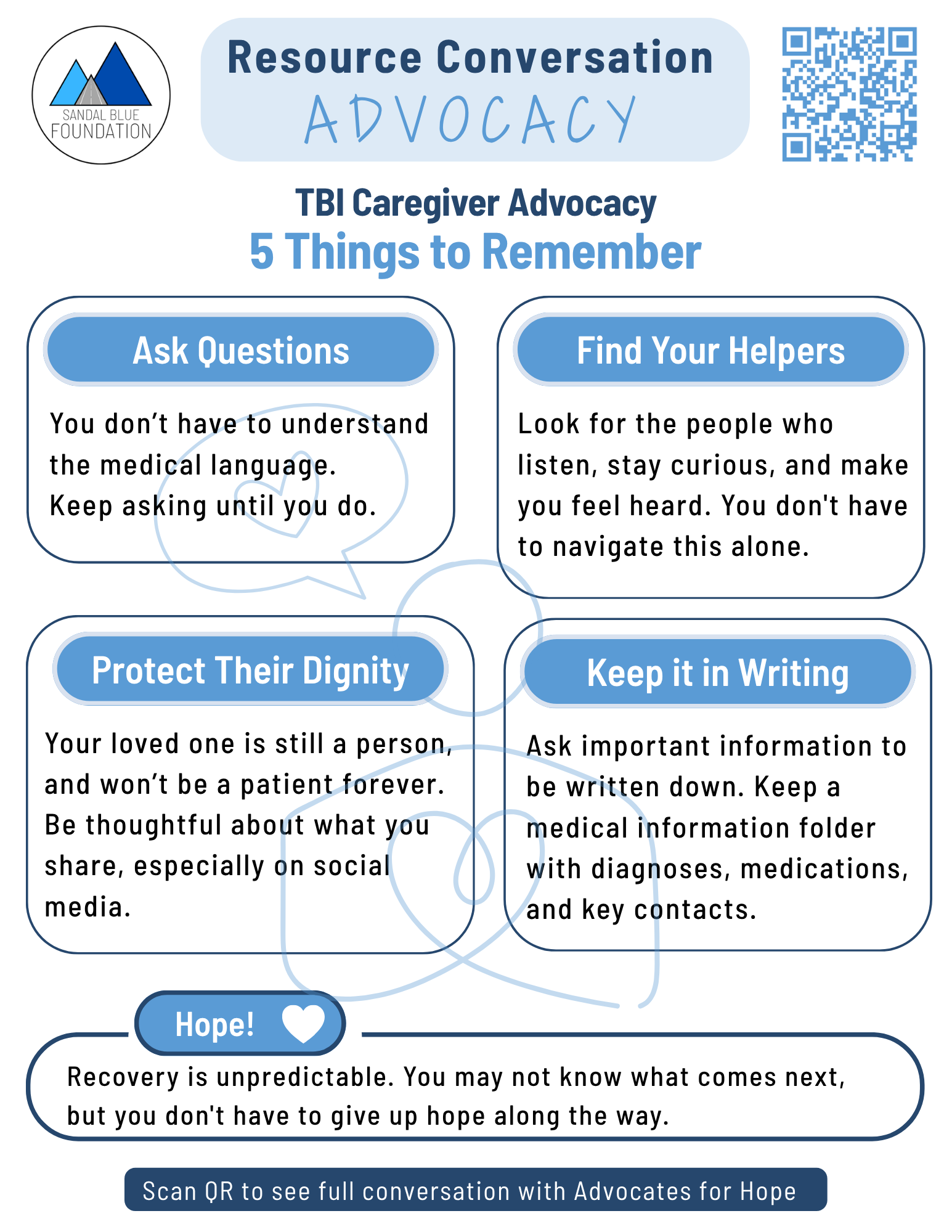
Ask questions. Find your helpers. Write things down. Protect your loved one’s dignity. Prepare for the next step. And give yourself permission to ask for help.
You are part of your loved one’s care team, and your questions matter.
Watch the full Resource Conversation with Kathleen Skeins from Advocates for Hope.